Category: iPhone

  • Apple releases iOS 26.2.1, iPadOS 26.2.1 updates, adds second-gen AirTag support, other bug fixes

    Apple releases iOS 26.2.1, iPadOS 26.2.1 updates, adds second-gen AirTag support, other bug fixes

    It’s not a huge update, but it syncs with a cool new accessory and could offer some under-the-hood fixes.

    Apple on Monday released iOS 26.2.1 for the iPhone and iPadOS 26.2.1 for the iPad.

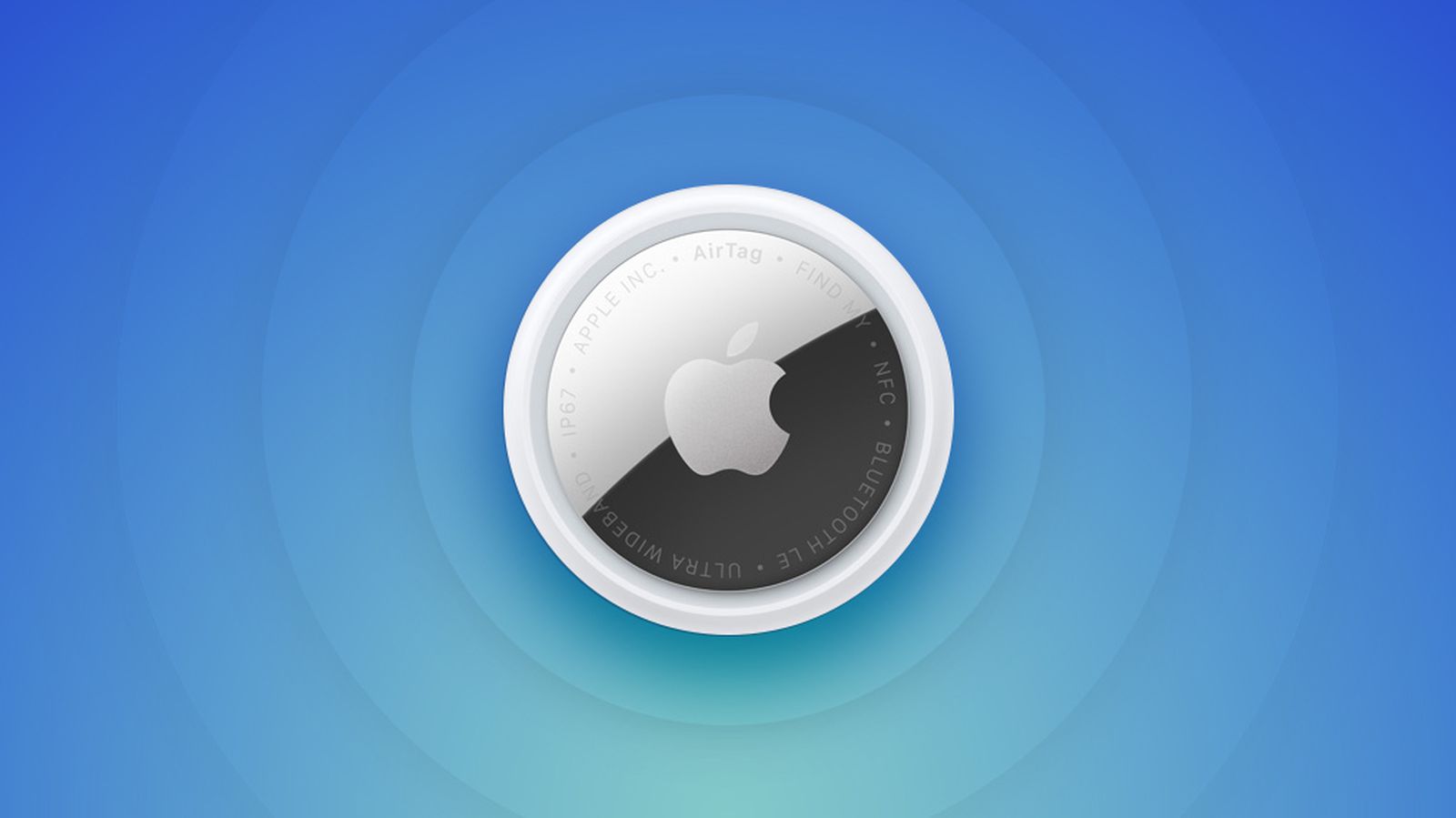
    The latest update pairs with the newly announced AirTag 2, which has a louder speaker and extended range for Precision Finding thanks to an upgraded Ultra Wideband chip inside.

    According to the release notes, it also offers unspecified bug fixes.

    Apple is also testing iOS 26.3, likely arriving in February, which is expected to enhance texting capabilities with Android phones. It’s expected that iOS 26.3 will introduce a notification forwarding feature in markets where legally required.

    As usual, the update can be located, downloaded, and installed by navigating to Settings > General > Software Update on your iPhone.

    Via 9to5Mac

  • Apple announces second-generation AirTags, cites longer range, louder speaker, other features

    Apple announces second-generation AirTags, cites longer range, louder speaker, other features

    If you’ve been hankering for the second generation of Apple’s AirTag devices, they’re on their way.

    Apple on Tuesday announced its next-generation AirTag, complete with key features such as longer range for tracking items as well as a louder speaker. Like the first generation, the new units can attach to a backpack, keys, or other items, and be tracked with the Find My app on the iPhone, iPad, Mac, Apple Watch, and iCloud.com.

    The new AirTag is equipped with a second-generation Ultra Wideband chip, enabling the Precision Finding feature to work up to 50 percent farther away from an item compared to the previous-generation model, according to Apple. The new AirTag also has an upgraded Bluetooth chip for improved overall range outside of Precision Finding mode. The updated speaker is also 50 percent louder than the first-generation model, according to Apple.

    The external design of the new AirTag remains the same, although its weight has increased slightly. The unit continues to be powered by a CR2032 coin cell battery, and the new AirTag has the same IP67-rated water resistance as the original one. Buyers can also find free personalized engraving for the device through Apple.com and in the Apple Store app.

    The new AirTag requires an iPhone running an incoming iOS 26.2.1 update or later, per Apple. watchOS 26.2.1 is also coming, and it expands Precision Finding to the Apple Watch Series 9 and later, and Apple Watch Ultra 2 and later. It’s unknown if this is for the new AirTag only or also works with the original model.

    The new AirTag is available to order on Apple.com and in the Apple Store app as of Monday, and it will be available at Apple Store locations later this week. In the U.S., pricing remains set at $29 for an individual AirTag, while a four-pack retails for $99.

    Stay tuned for additional details as they become available.

    Via MacRumors and Apple

  • Apple Pay may be making inroads into the Indian marketplace after almost a decade of effort, legal wrangling

    Apple Pay may be making inroads into the Indian marketplace after almost a decade of effort, legal wrangling

    After nearly a decade of legal and financial wrangling, Apple Pay may be en route to India.

    According to 91mobile, Apple Pay, which first debuted in 2014, could be headed for the Indian marketplace. Reportedly, Apple is in discussions with Indian banks, local government regulators, and also Visa and Mastercard.

    Apple is said to be negotiating fees with assorted card issuers, and as such, there’s been no confirmation. The issue of card payments is its own hurdle, as since 2022, Apple has not accepted credit or debit cards in India.

    Instead, users of services such as the App Store or Apple Music in India have had to use what’s called the Unified Payments Interface (UPI). This service is the dominant payment platform in India, and other firms must apply for a licence to integrate with it. Apple is reported to be unwilling to do this at first, as the process of applying to and integrating UPI is complicated. At present, both Google and Samsung Wallet work with UPI.

    Should this deal go through, it’ll suit those using credit cards or making international payments as opposed to day-to-day UPI-based spending. Still, the deal would function as a benchmark of progress into the Indian market, which Apple has desired since at least 2017. The UPI roadblock and applying for a license could bring their own headaches, as Apple would have to set up data storage facilities in India, or work with a local partner.

    There was also an issue regarding biometric authentication, then Touch ID and later Face ID. According to Indian law, biometric authentication would have to be validated by an external government agency each time it was used.

    Stay tuned for additional details as they become available.

    Via AppleInsider and 91mobiles

  • Rumor: Apple developing AI-based Siri chatbot for iOS 27, iPadOS 27, and macOS 27

    Rumor: Apple developing AI-based Siri chatbot for iOS 27, iPadOS 27, and macOS 27

    Following extensive deals with assorted AI developers, Apple is apparently looking to turn Siri into an AI-powered chatbot that could rival Anthropic’s Claude, Google’s Gemini, and OpenAI’s ChatGPT.

    According to Bloomberg, this wasn’t Apple’s initial plan, although the popularity of assorted chatbots on the market forced the company’s executives to reconsider.

    The Siri chatbot, codenamed “Campos,” will be integrated into the iOS 27, iPadOS 27, and macOS 27 operating systems and replace the current version of Siri. It will have the same natural language conversation functionality as chatbots like ChatGPT, and it will be accessible by using the “‌Siri‌” wake word or by holding down the side button on an iPhone or iPad.

    Apple is said to be testing the chatbot as a standalone app, even if the long-term goal won’t be to offer it in an app form. Instead, it will be integrated directly into Apple devices and powered via a custom model based on Google Gemini. It’s thought that the chatbot will be able to search the web, generate content, help with coding, summarize information, and analyze uploaded files. It will be able to use personal data on a person’s device to complete tasks, and it will result in a much-improved search feature. Apple is also said to be designing a feature that will allow the chatbot to view open windows and on-screen content, as well as adjust device features and settings.

    The new chatbot will also integrate into all Apple apps, including Photos, Mail, Messages, Music, and TV, and be capable of analyzing content within the apps to respond to queries and requests. Where the user interface is concerned, it will be available to communicate with via voice and type-based interface options.

    Apple is also said to be considering how much the chatbot will be able to remember. While the Claude and ChatGPT chatbots are currently able to glean extensive information about users through past conversations, thus allowing for personalization, Apple could limit Siri’s memory to address privacy-based concerns.

    Finally, the Siri chatbot will function as an upgrade to the more personalized version of Siri that Apple is said to be developing for the iOS 26.4 update. This version of Siri will implement the Apple Intelligence features that were initially promised in iOS 18, and the redesigned Siri chatbot will debut later this year with the release of iOS 27.

    Apple currently plans to unveil ‌Siri‌ chatbot at the Worldwide Developers Conference in June, after which testing of iOS 27 will begin.

    Stay tuned for additional details as they become available.

    Via MacRumors and Bloomberg
  • Some Final Cut Pro and Logic Pro 90-day trial links are still active as Apple transitions to Creator Studio offerings

    Some Final Cut Pro and Logic Pro 90-day trial links are still active as Apple transitions to Creator Studio offerings

    Following up on Apple’s announcement last week about Apple Creator Studio becoming available for subscription, there may be a way to get a free 90-day trial for its Final Cut Pro and Logic Pro applications.

    Per 9to5Mac, while Apple has replaced standalone 3-month trials of Logic Pro and Final Cut Pro with Apple Creator Studio’s 1-month test period, Creator Studio offers Final Cut Pro, Logic Pro, and Pixelmator Pro on Mac and iPad, along with Motion, Compressor, and MainStage on Mac.

    The $12.99/month or $129/year service will roll out on January 28, but Apple will still offer one-time purchases for Final Cut Pro, Logic Pro, Pixelmator Pro, Motion, Compressor, and MainStage through the Mac App Store.

    According to Reddit and MacMagazine, Apple “has discontinued the trial versions of Final Cut Pro and Logic Pro”. Where users could previously download 90-day trial versions of Final Cut Pro and Logic Pro independently, you can still use trial links at https://www.apple.com/uk/final-cut-pro/trial/, or https://www.apple.com/it/logic-pro/trial/, which still allow users to download the trial versions of both apps, although it is very likely that Apple will also pull these links sooner rather than later.

    The trial links across several regions are rapdily changing, with some original trial pages still working, while others redirect to the new Apple Creator Studio landing pages or to the App Store.

    Still, there may be some time left to download and use the 90-day trials before the January launch date for Apple Creator Studio.

    Stay tuned for additional details as they become available.

    Via 9to5Mac, Reddit, and MacMagazine