Category: iOS

  • T-Mobile states iOS 15.2 bug led to iCloud Private Relay feature being disabled for some users

    T-Mobile states iOS 15.2 bug led to iCloud Private Relay feature being disabled for some users

    Following the recent revelation that Apple’s iCloud Private Relay appears to have been disabled by wireless carriers Sprint and T-Mobile, T-Mobile offered the following statement to Bloomberg‘s Mark Gurman, in which it stated that iOS 15.2 device settings that default to the feature being toggled off, and that Apple has been contacted. T-Mobile explicitly says that ‌iCloud‌ relay has not been blocked:

    Overnight our team identified that in the 15.2 iOS release, some device settings default to the feature being toggled off. We have shared this with Apple. This is not specific to T-Mobile. Again though, we have not broadly blocked iCloud Private

    T-Mobile has stated that some subscribers who are using plans and features with content filtering are not able to access ‌iCloud‌ Private Relay, though 9to5Mac claims that some of the users unable to access ‌iCloud‌ Private Relay do not have content filtering enabled:

    Customers who chose plans and features with content filtering (e.g. parent controls) do not have access to the iCloud Private Relay to allow these services to work as designed. All other customers have no restrictions.

    Given T-Mobile’s comments, it seems that the issue stems from certain features being disabled by default, and that the iCloud Private Relay is not being explicitly blocked for T-Mobile customers.

    Apple has in turn updated its iCloud Private Relay support document to clarify how users can make sure that ‌iCloud‌ Private Relay is enabled for a cellular network in iOS 15.2 by going to Settings > Cellular > Cellular Data Options and ensuring that “Limit IP Address Tracking” is turned on.

    In the U.S., AT&T, Verizon, and T-Mobile have not spoken out against ‌iCloud‌ Private Relay nor have they suggested U.S. networks won’t support the feature.

    Stay tuned for additional details as they become available.

    Via MacRumors, @markgurman, and support.apple.com

  • Apple discontinues selling the Beddit Sleep Monitor, Beats Pill+ speaker on its website

    Apple discontinues selling the Beddit Sleep Monitor, Beats Pill+ speaker on its website

    Apple has quietly discontinued selling the Beats Pill+ as well as the Beddit Sleep Monitor from its online storefront.

    Beddit, the Apple-owned sleep tracking and monitoring service, launched the Beddit Sleep Monitor 3.5 in late 2018, roughly a year and a half after the firm was acquired. Three years later, it’s no longer being sold.

    Product listings for Beddit’s goods have disappeared from view on Apple’s U.S. website as well as a number of other countries, and attempts to buy the product from Beddit’s website also seem to fail to go through.

    Before its removal from sale, the Beddit Sleep Monitor was available to purchase for $149.95. Though it is no longer available from Apple directly, it may still be purchasable from third-party retailers while stocks last.

    At present, the Reddit companion app is still listed on the App Store. It’s thought that it will remain there to support customers who own the associated products.

    The Beats+ Pill, which is produced by Apple subsidiary Beats, is also not available on Apple’s online storefront as well as the Beats website. The Beats website, in turn, now offers only earbuds and headphones.

    The Beats Pill+ was introduced in 2015 as the first Bluetooth speaker from Beats since its acquisition by Apple. Priced at $230, it was a mid-sized speaker which recharged via Lightning.

    It’s unknown if Beats will introduce new products to replace the latest departures. In the case of Beddit, Apple has looked into ways to improve sleep tracking, but hasn’t progressed any further hardware-wise beyond Beddit than the sleep tracking features built into the Apple Watch.

    The Beats Pill+ also tends to competes with Apple’s HomePod mini as a compact speaker, albeit the Beats Pill+ offered portability that the HomePod mini doesn’t.

    Stay tuned for additional details as they become available.

    Via AppleInsider and 9to5Mac

  • T-Mobile/Sprint begin blocking iCloud Private Relay feature for iPhone users

    T-Mobile/Sprint begin blocking iCloud Private Relay feature for iPhone users

    On Monday, a report indicated that some European wireless carriers had begun blocking the Private Relay feature introduced by iOS 15. This feature is designed to give users an additional layer of privacy by ensuring that no one can view the websites that they visit. 

    In addition to the European carriers, it seems that T-Mobile/Sprint in the United States has begun blocking iCloud Private Relay access when connected to cellular data. 

    Apple had initially shipped the iCloud Private Relay feature as a “public beta,” which means that it’s disabled by default under iOS 15 and macOS Monterey. Users can enable it by going to Settings on your iPhone, tapping your name at the top, choosing iCloud, and choosing “Private Relay.” 

    T-Mobile was among the carriers in Europe that signed an open letter expressing concern about the impact of Private Relay. The carriers wrote that the feature cuts off networks and servers from accessing “vital network data and metadata and could impact “operator’s ability to efficiently manage telecommunication networks.” 

    Via an error message one user had received via the Settings app

    Your cellular plan doesn’t support iCloud Private Relay. With Private Relay turned off, this network can monitor your internet activity, and your IP address is not hidden from known trackers or websites. 

    Apple has yet to offer a public comment as to this situation.

    Please let us know if you’ve seen this issue on your end in the comments.

    Via 9to5Mac and @guidryjd

  • LastPass master password list may have been compromised

    LastPass master password list may have been compromised

    LastPass has apparently been breached.

    A number of the password service’s members have reported issues when using multiple attempted logins with their correct master passwords from various locations. The company has stated that the recent attacks are a result of shared passwords gleaned from breaches of other services.

    Per Hacker News, an unknown number of LassPass master passwords appear to have been compromised. While the exact number is unknown, a pattern has emerged therein the majority of reports appear to come from users with outdated LastPass accounts, meaning they haven’t used the service in some time and haven’t changed the password. This indicates the master password list being used may have come from an earlier hack.

    Some users have also claimed that changing their password hasn’t helped resolve the issue. In the case of one user, they saw new login attempts from various locations with each password change. It is unclear how severe the password leak may be, or if LastPass is currently under attack.

    LastPass spokesperson Meghan Larson offered the following comment:

    “LastPass investigated recent reports of blocked login attempts and we believe the activity is related to attempted ‘credential stuffing’ activity, in which a malicious or bad actor attempts to access user accounts (in this case, LastPass) using email addresses and passwords obtained from third-party breaches related to other unaffiliated services. It’s important to note that, at this time, we do not have any indication that accounts were successfully accessed or that the LastPass service was otherwise compromised by an unauthorized party. We regularly monitor for this type of activity and will continue to take steps designed to ensure that LastPass, its users, and their data remain protected and secure.”

    It’s been recommended that LastPass users change their passwords, enable two-factor authentication, and keep an eye out for suspicious login attempts. There is also the option of removing passwords from the service and migrating to 1Password or Apple’s iCloud Keychain.

    Stay tuned for additional details as they become available.

    Via AppleInsider and Hacker News

  • DuckDuckGo to launch desktop web browser in 2022

    DuckDuckGo to launch desktop web browser in 2022

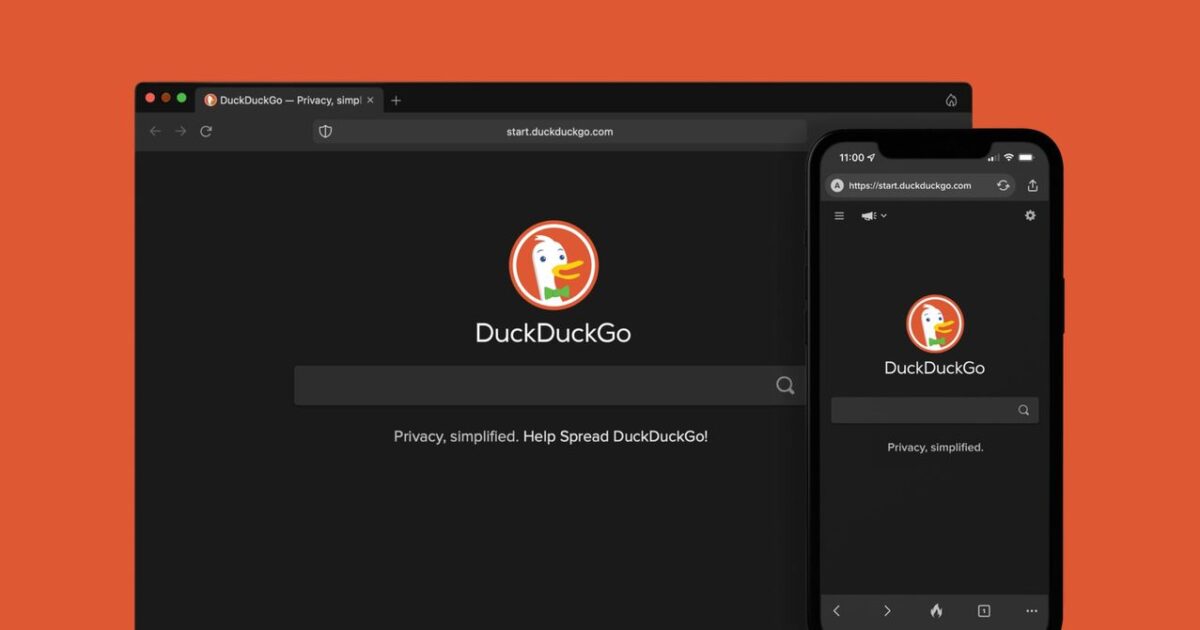
    On Tuesday, software developer DuckDuckGo shared its review of achievements and improvements for 2021 and offered the following details as to a plan to release a private browser for the desktop:

    Instead of forking Chromium or anything else, we’re building our desktop app around the OS-provided rendering engines (like on mobile), allowing us to strip away a lot of the unnecessary cruft and clutter that’s accumulated over the years in major browsers. With our clean and simple interface combined with the beloved Fire Button from our mobile app, DuckDuckGo for desktop will be ready to become your new everyday browsing app.

    So, if you love DuckDuckGo and its privacy and security features, there should be an updated version for your desktop en route for 2022.

    Stay tuned for additional details as they become available.

    Via The Mac Observer and spreadprivacy.com