Category: Take Apart

  • Apple announces M5 Pro and M5 Max-based MacBook Pro notebooks

    Apple announces M5 Pro and M5 Max-based MacBook Pro notebooks

    The new product releases are coming out this week, and for fans of the M5-based MacBook Pro notebooks, you’re going to like this.

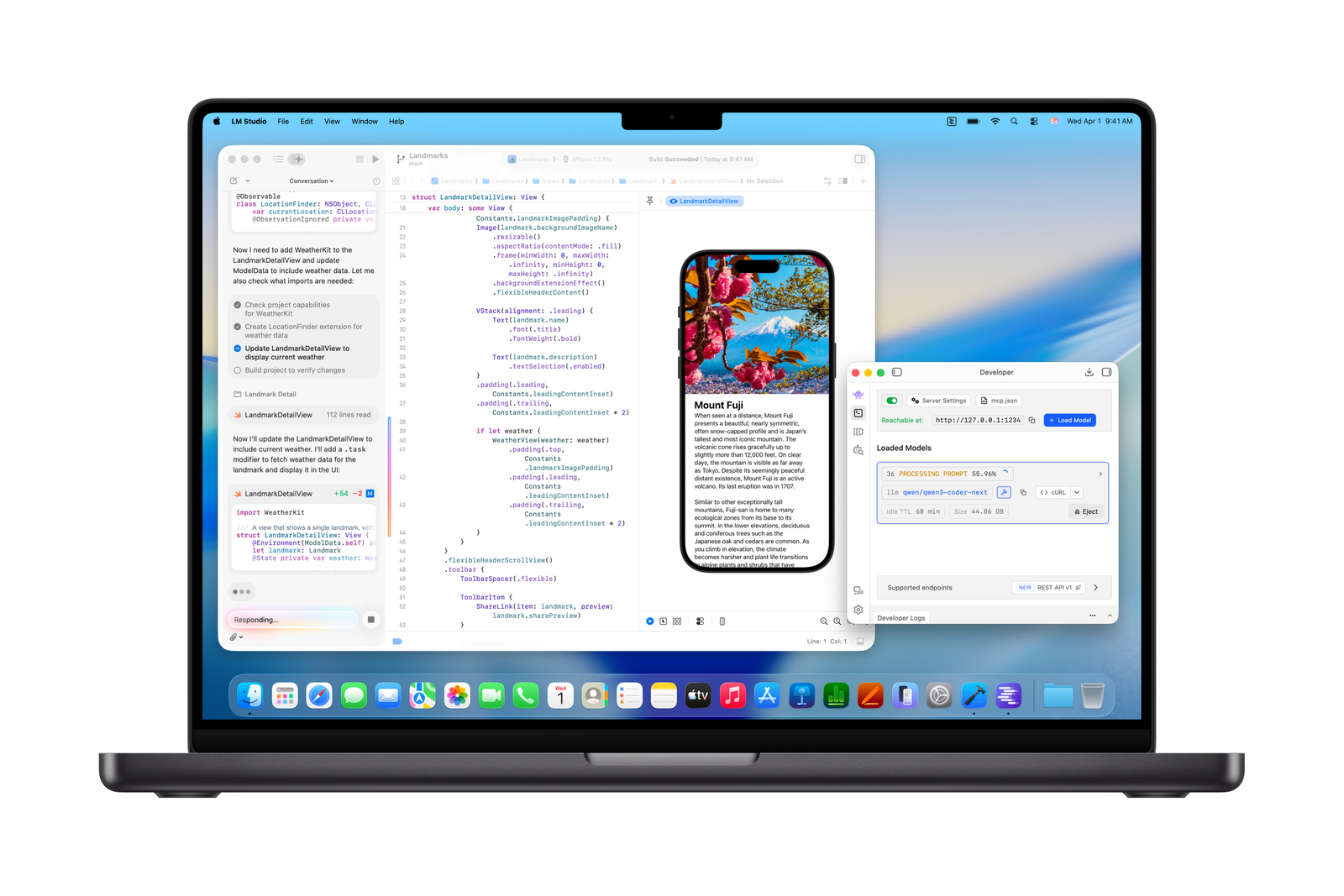
    Apple on Tuesday announced its new 14-inch and 16-inch MacBook Pro notebooks featuring M5 Pro and M5 Max chips. The chips are built on Apple’s new Fusion Architecture, which bonds two third-generation 3nm dies into a single chip using advanced packaging. Prior to this, chips were fabricated using a single-die design, and the two bonded dies house the notebook’s CPU, GPU, Media Engine, Neural Engine, unified memory controller, and Thunderbolt 5 capabilities together.

    Both chips feature an 18-core CPU, which is up from the 14-core and 16-core designs of the M4 Pro and M4 Max, respectively. The CPU now includes six “super cores” alongside 12 efficiency-focused performance cores. Apple claims up to 30 percent faster multithreaded performance over the M4 generation, and up to 2.5x faster than M1 Pro and M1 Max.

    The M5 Pro chip features up to 20 GPU cores, while the M5 Max chip offers 40 cores, which each GPU core including a Neural Accelerator that Apple has stated offers four times the peak AI compute compared to M4 Pro and M4 Max. Apple claims up to 50 percent faster graphics overall, with ray-tracing workloads seeing up to 35 percent improvement over the previous generation.

    Available RAM/Unified Memory has been boosted as well, with the M5 Pro model supporting up to 64GB of Unified Memory (up from 48GB on the M4 Pro model), with bandwidth now reaching 307GB/s. The M5 Max retains its 128GB maximum but raises bandwidth to 614GB/s.

    Storage speeds have also been boosted, with Apple citing up to 2x faster read/write speeds compared to the M4 notebooks, and topping out at 14.5GB/s. Base storage has also increased, the M5 Pro models starting at 1TB, while the M5 Max models start at 2TB.

    Where networking is concerned, the new MacBook Pro models ship with Apple’s N1 wireless networking chip, which offers Wi-Fi 7 and Bluetooth 6 support. This serves as an upgrade from the Wi-Fi 6E and Bluetooth 5.3 found in last year’s M4 Pro and M4 Max models.

    Other additions include a 16-core Neural Engine with a faster memory connection that Apple says speeds up on-device Apple Intelligence tasks, and an updated Media Engine that adds hardware-accelerated AV1 decode alongside existing H.264, HEVC, and ProRes support. There’s also Memory Integrity Enforcement – an always-on memory safety feature Apple calls an industry first.

    The Thunderbolt 5 ports are similar to those from the M4 generation, with each port receiving its own dedicated controller on the chip, allowing for all three ports to run at full bandwidth simultaneously. The M5 Pro can support to two high-resolution monitors, while M5 Max supports up to four.

    In terms of battery life, Apple says it tops out at 24 hours on the 16-inch model, and that users can fast-charge to 50 percent in 30 minutes with a 96W or higher USB-C adapter.

    The 14-inch MacBook Pro with the M5 Pro chip starts at $2,199, with the 16-inch model starting at $2,699. The 14-inch M5 Max model starts at $3,599, with the 16-inch starting at $3,899. All models are available in space black and silver, with pre-orders opening tomorrow, March 4, and availability beginning Wednesday, March 11.

    Stay tuned for additional details as they become available.

    Via MacRumors and Apple

  • Apple announces iPhone 17e handset, adds A19 chip, MagSafe charging, other internal features over the iPhone 16e

    Apple announces iPhone 17e handset, adds A19 chip, MagSafe charging, other internal features over the iPhone 16e

    As anticipated, Apple announced its new iPhone 17e handset on Monday. Just one year after the introduction of the iPhone 16e, the device enters the market for users on a budget.

    Per AppleInsider, the new model adds moderate upgrades, with the overall design remaining unchanged and the device retailing a 6.1-inch OLED screen. The overall design is also unchanged, with flat sides, the Action Button, and a single camera on the back sans bump as before. However, the main changes are internal.

    The iPhone 17e offers an A19 processor, matching the chip used in the base version of the iPhone 17. The A19 chip itself offers two performance cores and four efficiency cores for the CPU, while the GPU has four cores. This is one GPU down from the five-core version in the iPhone 17’s version, but the Neural Accelerators added to each GPU core will give a significant boost to machine learning tasks.

    The handset now offers the C1X cellular modem, which doesn’t support mmWave, but is an improved version of Apple’s C1 modem, which is also capable of features such as Emergency SOS, Roadside Assistance, Messages, and Find My via Satellite are. Other new features include MagSafe charging, which was missing from the iPhone 16e, despite its inclusion of Qi wireless charging support. The handset will work with MagSafe charging accessories, and will work at up to 15W, up from 7.5W support.

    The iPhone 17e offers a single camera, as seen in the previous model, and sports a 48MP Fusion Camera with Deep Fusion computational photography, Portrait Mode with Portrait Lighting, Photographic Styles, Night Mode, and a 10x digital zoom. Video capabilities extend to 4K Dolby Vision at 60fps, 1080p Slo-mo at 240fps, Cinematic Stabilization, and a 6x digital zoom.

    The battery life is cited at 26 hours of video playback, 21 hours when streamed, and up to 90 hours of audio playback and the iPhone 17e continues to be made available in a choice of Black and White finishes, plus a new soft pink.

    Pre-orders begin on Wednesday, March 4, 2026, and the iPhone 17e will be shipping from March 11, 2026. The iPhone 17e starts from $599 for the base 256GB model, and $799 for 512GB.

    Stay tuned for additional details as they become available.
    Via AppleInsider and Apple

  • Rumor: Two additional Display Studio 2 models hinted at in internal code references

    Rumor: Two additional Display Studio 2 models hinted at in internal code references

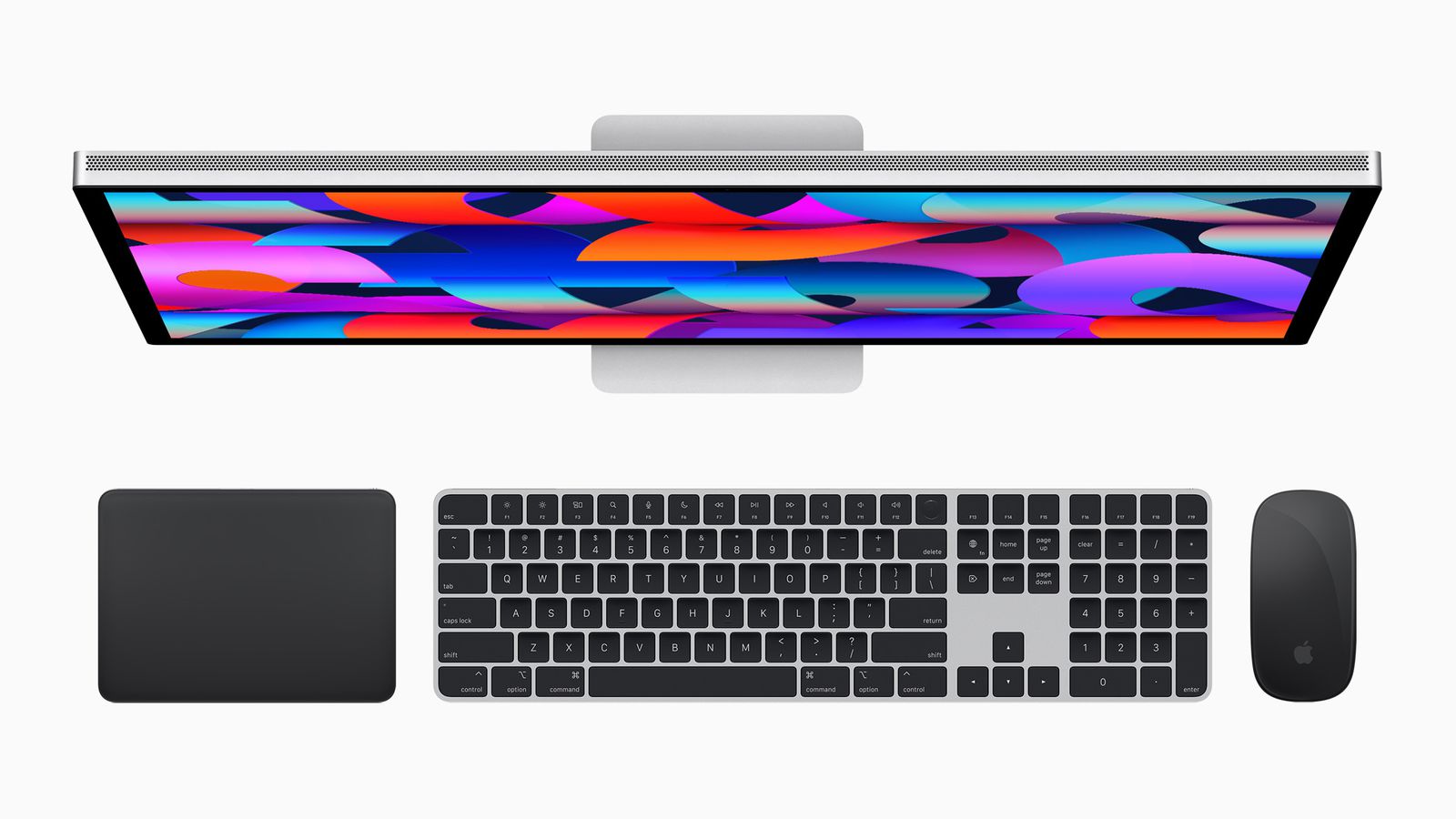
    Apple may have two new Studio Display models in the works.

    According to Macworld, and code references to “internal Apple files” that were found in a macOS Tahoe Kernel Debug Kit that leaked online last year, both of the new Studio Display models will feature ProMotion, enabling up to a 120Hz refresh rate, as well as HDR support for increased brightness and dynamic range.

    The higher-end Studio Display could feature two more potential upgrades, including superior speakers and more and/or higher-spec ports. Apple says the current Studio Display has a “high-fidelity six-speaker system” that supports Spatial Audio, and the monitor has one Thunderbolt 3 port that connects to and charges a Mac, and three USB-C ports for connecting accessories.

    The new model could feature at least one Thunderbolt 5 port, which could ensure enough bandwidth for both 5K resolution at 120Hz as well as accessories. Somewhat contrary to this, a recent leaker has claimed that at least one of the new Studio Display models will max out at 90Hz, so customers will have to see which rumor is correct.

    It’s also been rumored that the higher-end Studio Display could feature a 32-inch screen, while the lower-end model would remain at a 27-inch screen. A 32-inch screen would not allow for 5K resolution to be Retina quality, so the resolution would have to increase to 6K like on Apple’s higher-end Pro Display XDR.

    Per noted display industry expert Ross Young, at least one of the new Studio Display models would feature mini-LED backlighting. This could indicate that Apple might discontinue its Pro Display XDR with full-array LED backlighting and instead offer both lower-end and higher-end Studio Display configurations, albeit this is just speculation.

    Finally, it’s been rumored that at least one of the new Studio Display models could feature an A19 or A19 Pro chip, which would be a substantial upgrade from the A13 Bionic chip in the current model. This would contribute to improved performance, camera enhancements, and more. Other new features could include a higher 120Hz refresh rate, HDR support for increased brightness and contrast ratio, improved speakers, performance, and camera enhancements, and hopefully a larger 32-inch screen.

    No major design changes are expected.

    Apple is reportedly planning to release the new Studio Display models in the first half of 2026. The company first launched the Studio Display in March 2022, alongside the first Mac Studio desktop.

    Stay tuned for additional details as they become available.
    Via MacRumors and Macworld

  • Rumor: Apple’s foldable iPhone about to hit production, crease measurements unveiled

    Rumor: Apple’s foldable iPhone about to hit production, crease measurements unveiled

    Apple’s folding iPhone model may be beginning to take shape.

    Per Weibo, Chinese leaker “Fixed Focus Digital” has stated that Apple has submitted production line orders for its upcoming foldable iPhone.

    This rumor, if true, would effectively confirmd that the device will launch this year.

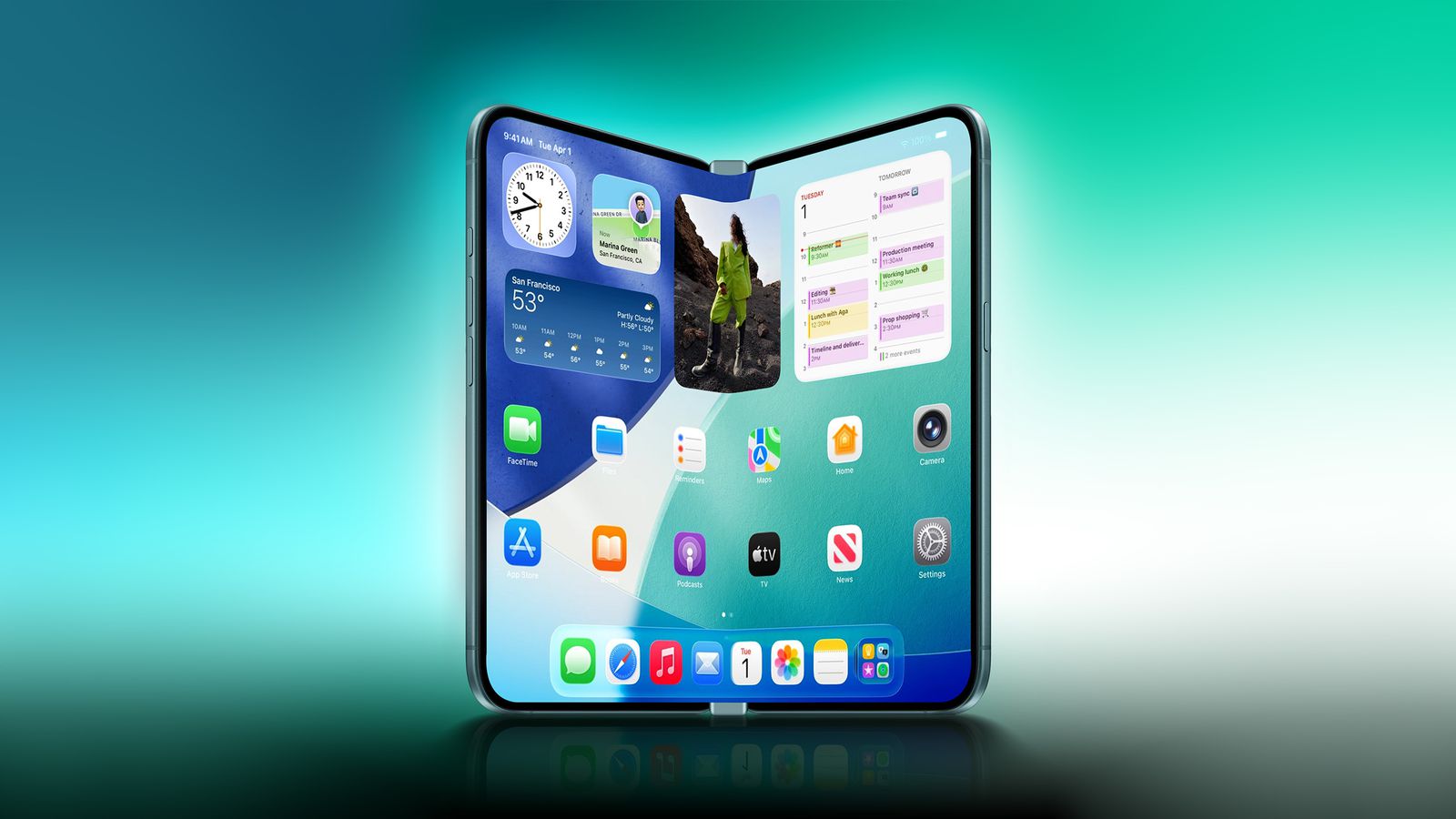
    The leaked orders indicate that Fixed Focus Digital has learned the crease measurements for the device’s 7.8-inch inner display. The current crease depth is now said to have been controlled to under 0.15mm. This measurement refers to the depth the groove or indentation at the fold is. A smaller number means the crease is shallower and less noticeable to the eye and to the touch.

    Apple’s crease angle is said to be under 2.5 degrees. This angle describes how sharp the fold line appears when the display has been unfolded. As expected, a smaller angle indicates a smoother, flatter transition across the fold, rather than a sharp ridge or valley.

    At present, competing foldable brands don’t publish their crease measurements, so it’s hard to gauge where Apple’s foldable iPhone stacks up against them. Even so, Apple’s unit is expected to feature a new type of display panel developed by Samsung that has never been used in a foldable product, and which has been described variously as being “virtually crease-free” and having “no crease at all.”

    Current rumors have the foldable iPhone featuring a 7.8-inch main display when unfolded and a 5.5-inch cover display. The unit is thought to use a book-style design similar to Samsung’s Galaxy Z Fold, as opposed to a clamshell form factor.

    Per analyst Ming-Chi Kuo, Apple’s first-gen foldable iPhone will feature two rear cameras, a single front-facing camera, a single selfie camera on the inner display, and Touch ID integrated into the power button. The device could measure just 4.5mm thick when unfolded, and between 9mm and 9.5mm when closed.

    It’s thought that Apple may reveal the foldable iPhone along with its iPhone 18 Pro models this September.

    Stay tuned for additional details as they become available.
    Via MacRumors and Weibo

  • Rumor: iPhone 18 Pro model enters production testing stage

    Rumor: iPhone 18 Pro model enters production testing stage

    If you’re hankering for the next-gen iPhone Pro model, you’re going to like this.

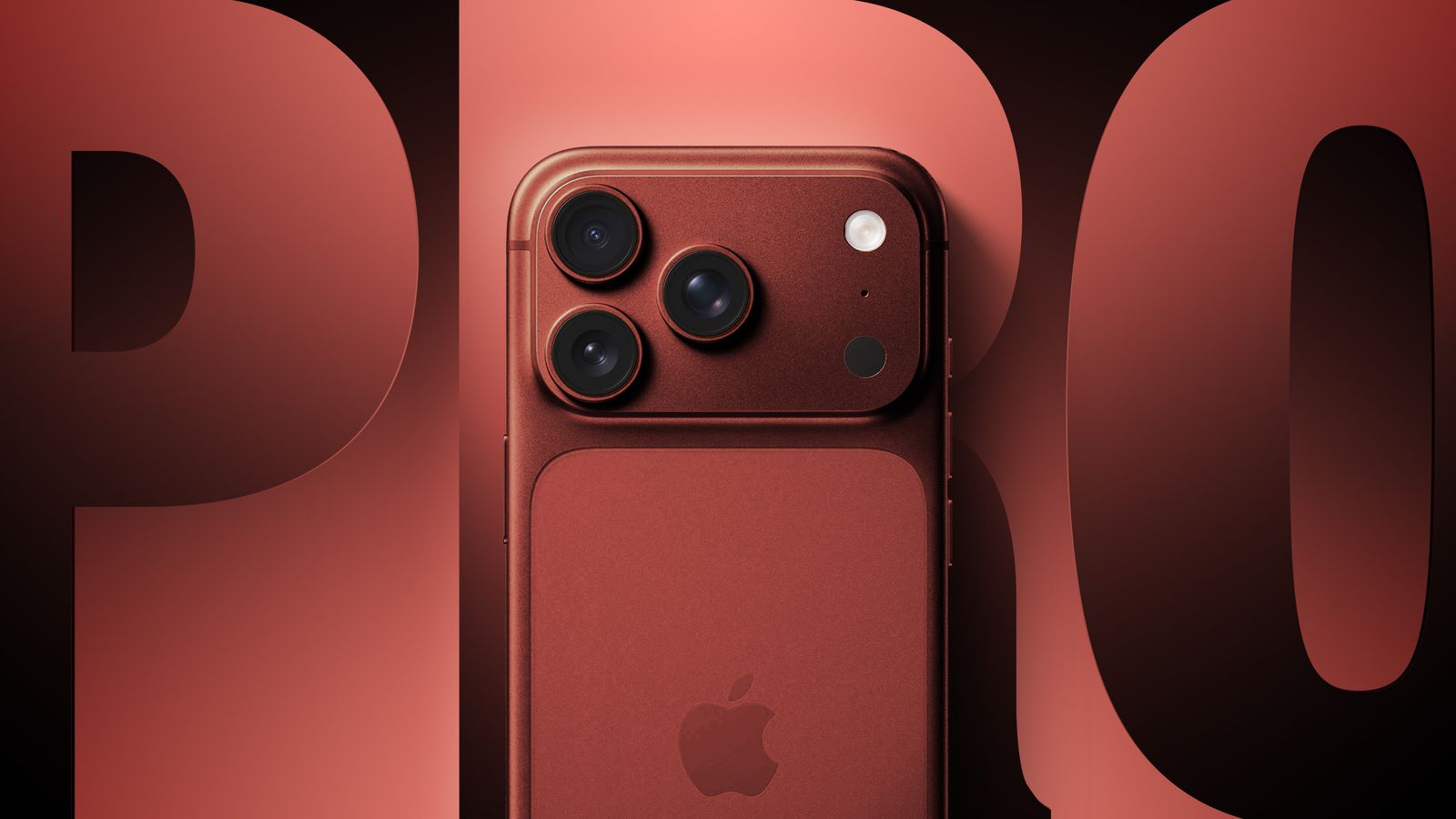
    Apple’s upcoming iPhone 18 Pro is said to have entered its production testing stage.

    Over on Weibo, the leaked known as “Fixed Focus Digital” said the Pro models had already entered “mass-production testing.” This likely refers to late-stage manufacturing validation for the devices ahead of a September launch.

    February typically aligns with Apple’s Design Validation Test (DVT) phase transitioning into early Production Validation Test (PVT). During this period, Apple uses production tooling and activates portions of factory assembly lines to validate manufacturing processes, yields, and quality control, rather than producing units at full scale. Full mass production usually ramps in the summer months ahead of launch.

    Fixed Focus Digital also claimed that production testing had begun for the regular iPhone 18 model, which may arrive in early 2027. It’s rumored that this procedure may be an earlier validation stage at this point, such as mid-to-late Engineering Validation Test (EVT) or early DVT.

    The leaker also stated that, given their current information, no major changes are expected for the iPhone 18 Pro’s component materials, and that the devices will continue to use the existing design specifications for the iPhone 17 lineup.

    While no major changes are expected, it’s thought that the iPhone 18 Pro will feature a number of internal changes, such as a new camera system with a variable aperture, the A20 chip, and the custom C2 modem.

    Stay tuned for additional details as they become available.

    Via MacRumors and Weibo