Category: Take Apart

  • Some iPhone 17 Pro, iPhone 17 Pro Max users report strange static/hissing noises when charging

    Some iPhone 17 Pro, iPhone 17 Pro Max users report strange static/hissing noises when charging

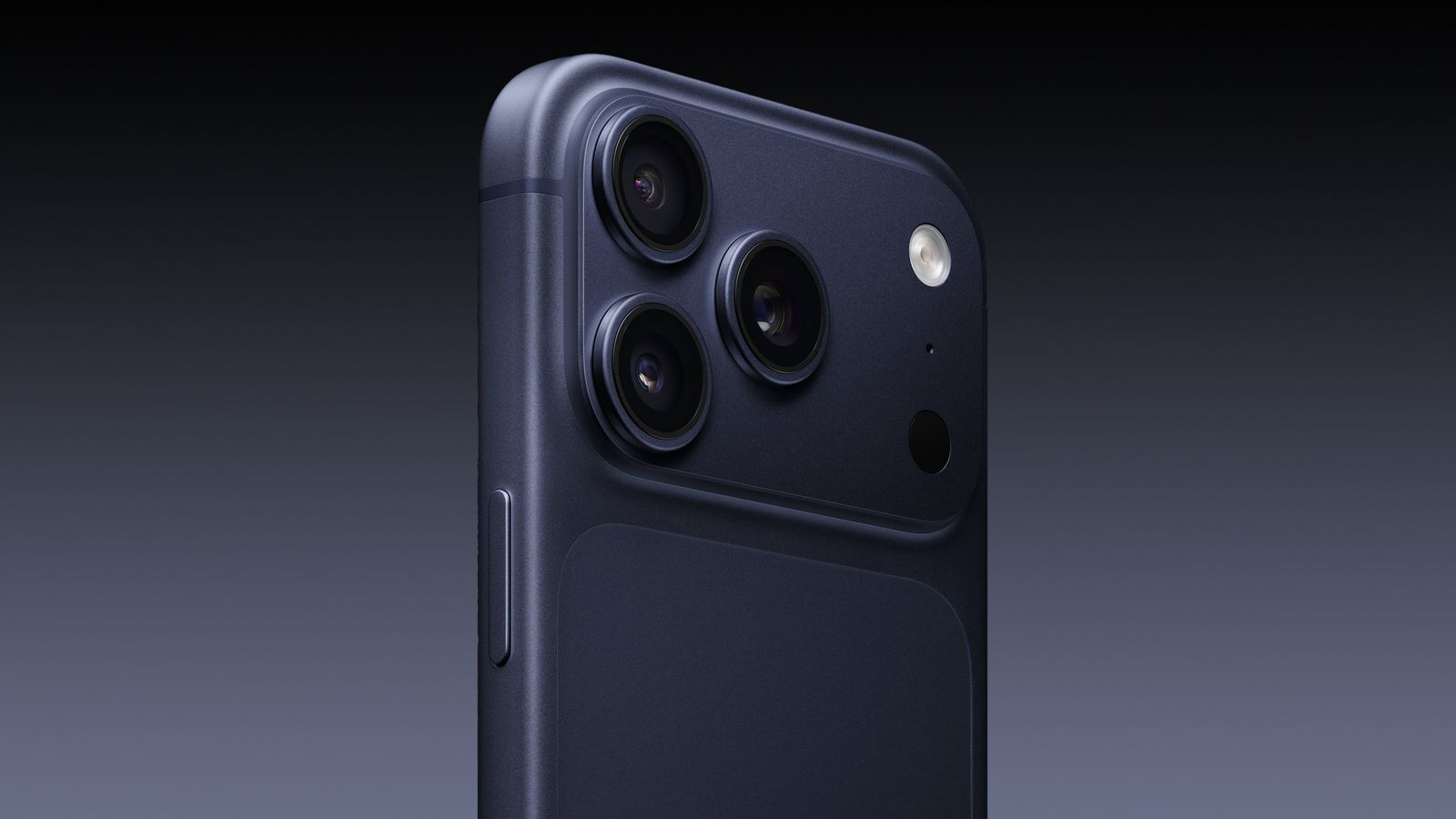
    This is a bit odd, and maybe a firmware update could resolve the issue with the iPhone 17 Pro and iPhone 17 Pro Max’s audio and the strange hissing noise that’s surfaced.

    Users have stated that the issue surfaces when they’ve been playing audio or turned the volume down, while others say the static is audible without anything playing from the speakers. In some cases, there is a low crackle or a hiss when scrolling through webpages when the ‌iPhone‌ is charging, and some people hear the noise at low volumes even when the ‌iPhone‌ isn’t on a charger.

    The affected users noted that the noise can be heard while using chargers of all types, including Apple’s official units. MagSafe charging also seems to trigger the issue as well, although users reported that the static noise was quieter in these instances. Unplugging the ‌iPhone‌ from the charger eliminates the sound for users who are experiencing the static noise when charging.

    Some ‌iPhone 17 Pro‌ users have exchanged their devices for new ones, but have run into the same issue.

    One Reddit user who was in contact with Apple’s support personnel stated that the issue has been forwarded to Apple’s engineers, and that Apple is apparently working on a fix. To date, the iOS updates that have been released so far do not appear to solve the problem. The sound is subtle, according to most reports, so it may be a widespread issue that only those sensitive to the noise have noticed.

    If you’ve seen this issue on your end, please let us know about your experience in the comments.

    Via MacRumors, Reddit, and discussions.apple.com

  • Apple to avoid steep U.S. tariffs on Chinese imports until mid-2027

    Apple to avoid steep U.S. tariffs on Chinese imports until mid-2027

    Apple and other U.S. technology companies may get a reprieve from some of the higher tariffs on Chinese components until 2027.

    Per AppleInsider and CNBC, a Federal Register filing from last Tuesday indicated that the United States will hold off on raising its new tariff on Chinese semiconductor imports until June 2027. This, in turn, could delay the financial hit on Apple’s component sourching efforts for Macs, iPhones, and other products.

    According to the filing, the Trump Administration confirmed it will take action against China under Section 301 of the Trade Act of 1974, and the response will be a tariff on semiconductors. The filing, in turn, will be implemented immediately, but the administration is setting the additional tariff rate at zero. Instead, the Trump Administration plans to increase the tariff level on June 23, 2027, effectively delaying the impact.

    The administration declined to state what the percentage would be, but said it will be announced at least 30 days ahead of the scheduled increase.

    The decision to hold off on raising the tariff cost will be helpful to many manufacturers. Aside from avoiding extra tariffs on current and near-future imports, it also buys companies time to arrange sourcing from other countries not affected by the tariff situation.

    Given that Apple still sources its A-series and M-series Apple Silicon chips from TSMC in Taiwan, the components are still subject to a 20 percent reciprocal tariff, but not on tariffs specifically targeting China.

    Apple was previously safe from the threat of a 100% percent semiconductor import tariff. It escaped that tariff because in August, it pledged to invest $100 billion in U.S. manufacturing efforts.

    Stay tuned for additional details as they become available.

    Via AppleInsider, Federal Register, and CNBC

  • Rumor: Apple working with Samsung to develop display for a 24-inch OLED iMac

    Rumor: Apple working with Samsung to develop display for a 24-inch OLED iMac

    You’ve been hankering for an Apple Silicon iMac for years with larger than a 21-inch screen, and Apple may be developing it.

    According to The Elec, Apple has placed “Requests for Information” with Samsung Display and LG Display regarding OLED displays that could be used for a future iMac.

    “Requests for Information,” or “RFI,” are basically when a company asks suppliers to provide specifications and other details as to a component the company needs for product development. In this case, Apple has stated in its requests that it is looking for a 24-inch OLED display that offers 218 pixels per inch density and 600 nits of brightness. This is roughly the same size and density as Apple’s current LED-based iMac display, albeit with higher brightness.

    Unfortunately, the article also points out that “RGB OLED technology capable of reliably mass-producing 20- to 30-inch displays has not yet been developed.” In this case, mass production has become successful for smaller OLED displays, and a supplier would need to develop a process to mass produce the larger displays, which could take some time.

    The Elect reports that Apple could complete development of the OLED iMac by 2027 or 2028. If everything goes as scheduled, the OLED iMac would ship in 2027 at the earliest should development finish in the early part of the year. It could also be more likely that the larger-display iMac would become available in 2028 or 2029. There’s also the possibility that Apple could scrap the project during its development stage.

    Apple has been gradually migrating its devices from LED displays to OLED, its current iPhone lineup using OLDs, which the iPad Pro stands as the only iPad to use an OLED. Reports have also said that Apple plans to release an OLED touchscreen MacBook Pro in the second half of 2026.

    Stay tuned for additional details as they become available.

    Via Macworld and The Elec

  • Apple tested a budget MacBook configuration running on an A15 chip

    Apple tested a budget MacBook configuration running on an A15 chip

    Apple may be expanding its efforts towards a budget MacBook notebook, as an internal Apple debug kit that was recently discovered noted that the company has tested a MacBook powered by an A15 chip. This appears alongside a separate A18 Pro-based MacBook that appears to be closer to a shippable product.

    The kit document was accidentally released on the Apple website earlier this year, with Apple quickly pulling the information after leaks began to surface from its publication.

    Within the document itself is a line that explicitly describes an unreleased MacBook configuration running an A15 chip. The row appears under a project label “mac14p” on a platform labeled H14P. It’s speculated that this A15 MacBook corresponds to the codename “J267.”

    The same dataset also includes a separate MacBook entry tied to the A18 Pro. It has the identifier J700 and is described as using an A18 Pro chip with a “Sunrise” wireless subsystem attributed to MediaTek. Between the A15 and the A18 Pro test configuration, the A18 Pro MacBook entry reads as a more defined product configuration, as it includes a specific internal codename and accompanying subsystem details.

    It seems unlikely that Apple would release a Mac powered by the A15 Bionic chip in 2026, as the A15 Bionic chip debuted in 2021, and the A18 Pro chip would be markedly more capable, future-proof, and in-step with the company’s current selection of chips.

    Still, this helps shore up rumors of Apple working on a low-cost MacBook powered by an iPhone chip. Other rumors as to the forthcoming notebook cite a 13-inch display, and silver, blue, pink, and yellow color options.

    Stay tuned for additioknal details as they become available.

    Via MacRumors

  • Apple adds battery, replacement tools for the 14-inch MacBook Pro with M5 to its Self Service Repair Store lineup

    Apple adds battery, replacement tools for the 14-inch MacBook Pro with M5 to its Self Service Repair Store lineup

    This could come in handy.

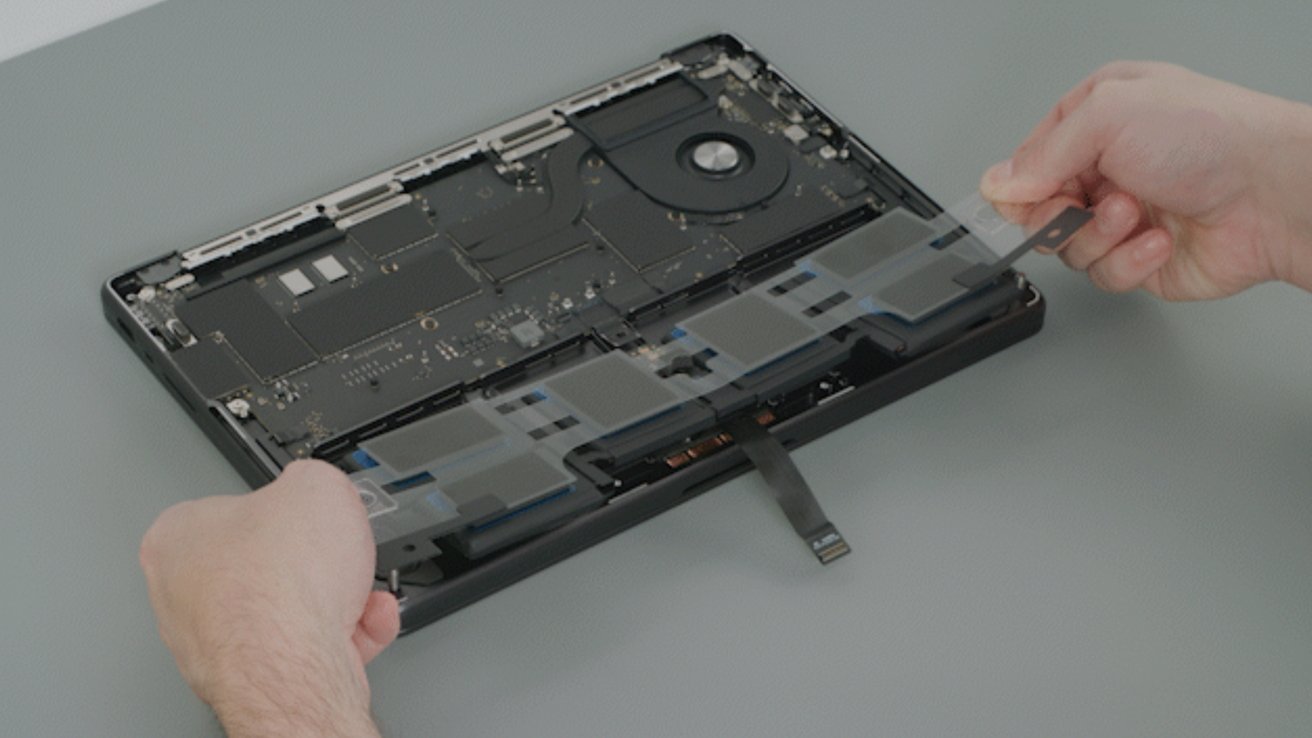
    On Tuesday, Apple acknowledged that it had added a 14-inch MacBook Pro with M5 battery replacement kit to its Self Service Repair Store, the company also introducing a manual to help with the process. Published teardowns have shown that the notebook doesn’t require users to remove the trackpad to remove the battery, but the included tools and manual could definitely help.

    For those looking to effect the repair themselves, the 14-inch MacBook Pro with M5 battery replacement process is fairly straightforward. It is done by removing the rear case, discharging the battery, removing the adhesive strips, then placing the new battery assembly inside.

    The battery itself retails for $209.25, and users can return their old battery for a $22.50 return credit. That doesn’t include the cost of the various tools required to do the job or the time it will take to do it.

    Apple’s service estimation tool says replacing the battery in a 14-inch MacBook Pro costs $249, while an active AppleCare plan knocks that down to zero. Going through an Apple Authorized Service Provider also comes with some guarantees and protections.

    If you’ve had a chance to try the battery replacement, please let us know about your experience in the comments.

    Via AppleInsider and selfservicerepair.com