Tag: antenna

  • Apple announces Apple Watch Series 11, Apple Watch Ultra 3 smartwatches

    Apple announces Apple Watch Series 11, Apple Watch Ultra 3 smartwatches

    Apple’s media event on Tuesday served as the announcement platform for a ton of goodies, among them, the company’s long-awaited Apple Watch Series 11 and Apple Watch Ultra 3.

    The Apple Watch Series 11 announcement cited new features such as hypertension detection, Sleep Score, 5G connectivity, and more. The physical elements of the Apple Watch have been upgraded, with Apple offering an improved Ion-X front crystal with 2x better scratch resistance thanks to a new Apple-designed ceramic coating that hardens the surface. Titanium models continue to feature sapphire front crystal.

    Under the hood, the Apple Watch Series 11 sports the same S10 chip as the Series 10, although 5G connectivity is now available on cellular models for the first time. A redesigned cellular antenna covers mode bands and simultaneously engages the two system antennas when needed, significantly increasing the signal strength, especially in areas with weak coverage.

    Where the battery is concerned, the Series 11 offers 24 hours of battery life, up from 18 hours found in previous generations of the Apple Watch. The new device also supports fast charging, which can charge up to eight hours of battery life in only 15 minutes.

    The new hypertension feature works to detect signals of high blood pressure over time. While Apple says it won’t detect all instances of hypertension, it expects to notify more than 1 million people of unknown hypertension in the first year. Apple is expecting approval from the FDA and other regulators. The company went on to explain that the system uses data from the optical heart sensor to analyze how a user’s blood vessels respond to the beats of the heart. The algorithm works passively in the background reviewing data over 30-day periods.

    The Sleep Score feature offers insights into sleep quality at a glance, and measures sleep duration, bedtime consistency, how often you wake up, and how long you spend in each sleep stage. The feature breaks these elements down, offering an idea as to what to prioritize to improve.

    The Apple Watch Series 11 continues to be available in both 42mm and 46mm casing sizes, and is available in both Wi-Fi only and cellular-enabled models. Aluminum models are available in Jet Black, Silver, Rose Gold, and Space Gray, while polished titanium cases come in Natural, Gold, and Slate. The retail price begins at $399 with pre-orders having begun on Tuesday and the retail launch beginning on Friday, September 19.

    Apple also announced the much-awaited Apple Watch Ultra 3, which now offers satellite connectivity, 5G cellular, and the largest ever display.

    The display is the largest ever on an Apple Watch. Apple used LTPO3 technology and wide-angle OLEDs to make the borders 24 percent thinner while keeping the same case size. The screen now updates once per second in always-on mode instead of once per minute, so you can see the seconds hand tick without lifting your wrist. Over 20 watch faces support the faster refresh rate, including Stopwatch and Timer.

    The Apple Watch Ultra 3 offers a new battery, complete with up to 42 hours of normal use and up to 72 hours in Low Power Mode. For continuous GPS workouts, Low Power Mode now lasts 20 hours with full heart rate monitoring, and 15 minutes of charging provides 12 hours of battery life.

    Apple’s new satellite connectivity feature allows users to text emergency services, message contacts, and share their location when they don’t have cellular or Wi-Fi coverage. The company claimed that the device can detect a car crash or hard fall while you’re unconscious and off the grid, wherein it will automatically contact emergency services.

    The device can also send regular texts, emoji, and Tapbacks to anyone you’ve messaged in the past 30 days, even without cell service. Apple says it had to redesign the radio and antenna to make this work, and that the antenna now has double the signal strength to reach satellites 800 miles overhead moving at 15,000 mph. The new Find My via satellite feature allows the device to send your location every 15 minutes to contacts you’ve previously added to Find My. Apple currently offers two free years of satellite access with the smartwatch, and the Emergency SOS works without a cellular plan, while messaging and location sharing require an active cellular subscription. Finally, a new Waypoint watch face provides live compass navigation and quick access to satellite communications. And Night Mode helps preserve night vision during outdoor adventures.

    For the athletes out there, the Workout Buddy feature usese Apple Intelligence to offer spoken motivation during exercise based on the user’s heart rate, pace, distance, and workout history. The feature works with Bluetooth headphones and requires an Apple Intelligence-supported iPhone nearby. The feature is available in English for popular workout types.

    If you’re planning on swimming, the Apple Watch Ultra 3 offers water resistance to 100 meters, and the titanium case comes in natural or black finishes.

    Pre-orders for customers in Australia, Canada, France, Germany, India, Japan, the UAE, the UK, the U.S., and more than 50 other countries and regions opened on Tuesday, with availability in stores beginning Friday, September 19.

    Stay tuned for additional details as they become available.

    Via MacRumors (1, 2)

  • Apple unveils Apple Watch Series 10, highlights thinner bezel, wide-angle OLED display, other new features

    Apple unveils Apple Watch Series 10, highlights thinner bezel, wide-angle OLED display, other new features

    Over at Apple’s “It’s Glowtime” media event, Apple unveiled its long-awaited Apple Watch Series 10, complete with a wide-angle OLED display that is larger than the Apple Watch Ultra, the company describing it as the “biggest display and thinnest design ever.”

    The new model measures 8.7mm thick, is nearly 10 percent thinner than the Apple Watch Series 9, and weighs 20 percent less than the Stainless Steel Series 9. The Aluminum cases also weigh up to 10 percent less, while the Series 10 also comes in Grade 5 titanium, replacing stainless steel.

    Apple has stated that this is its fastest-charging Apple Watch to date, and can reach an 80 percent charge in 30 minutes. The unit also uses a new neural network to reduce background noise when making calls with the watch.

    Apple has gone on to state that the Apple Watch Series 10 can play music and podcasts directly through its speaker for the first time ever. The unit also includes a new depth gauge (good to 20 feet), water temperature for pool and open water swims, and a new metal back that integrates the antenna into the housing.

    Where health features are concerned, the new model can alert you to sleep apnea conditions. Apple says the algorithm was developed using machine learning and clinical data, and then validated in a large clinical trial.

    The new Apple Watch Series 10 comes in Jet Black and Rose Gold, joining the existing Silver Aluminum colors. The Apple Watch Series 10 starts at $399, and $499 for cellular models, and will be available to purchase from Friday, September 20.

    Stay tuned for additional details as they become available.
    Via MacRumors

  • Profile of the Gourmet Haus Staudt beer hall recalls the chaotic days of the 2010 iPhone 4 prototype leak and the chaos that ensued

    It was probably Apple’s most famous security breach in the company’s 47-year history, and it was at least partially fueled by alcohol.

    On Thursday, March 18, 2010, a drunk Apple software engineer named Gray Powell left an iPhone 4 prototype on a barstool inside Redwood City’s Gourmet Haus Staudt beer hall. This seemingly innocuous act would eventually result in a $5,000 cash purchase of stolen property, a police raid and accusations of extortion from then-CEO Steve Jobs.

    It would also set off a complete media frenzy that would bring the world’s attention to the bar, which was located only a mere 20 miles from Apple’s Cupertino headquarters.

    A terrific SFGate article details the story of how the Apple engineer accidentally left the iPhone 4 prototype at the bar, how owner Brian Hogan mistook it for an iPhone 3GS, how Hogan tried to get it back to its owner, and the chaotic frenzy that took place when people realized what the device was, how its hardware was different from previous generations, what the prototype might be worth, and what the device indicated as to the future of Apple’s hardware (especially its antenna module).

    The story took its next turn when Gizmodo acquired the prototype, Apple’s legal team became involved in efforts to get it back, and the question of the first amendment versus intellectual property came into play.

    Click the link below, give it a read, and please let us know what you think in the comments.

    Via SFGATE, Gizmodo, The New York Times, CNET, and Business Insider

  • iFixit posts teardown video of AirPods Pro 2 earbuds, charging case

    iFixit posts teardown video of AirPods Pro 2 earbuds, charging case

    If you’re tempted to open up and modify or repair your brand new AirPods Pro 2 earbuds, you probably shouldn’t.

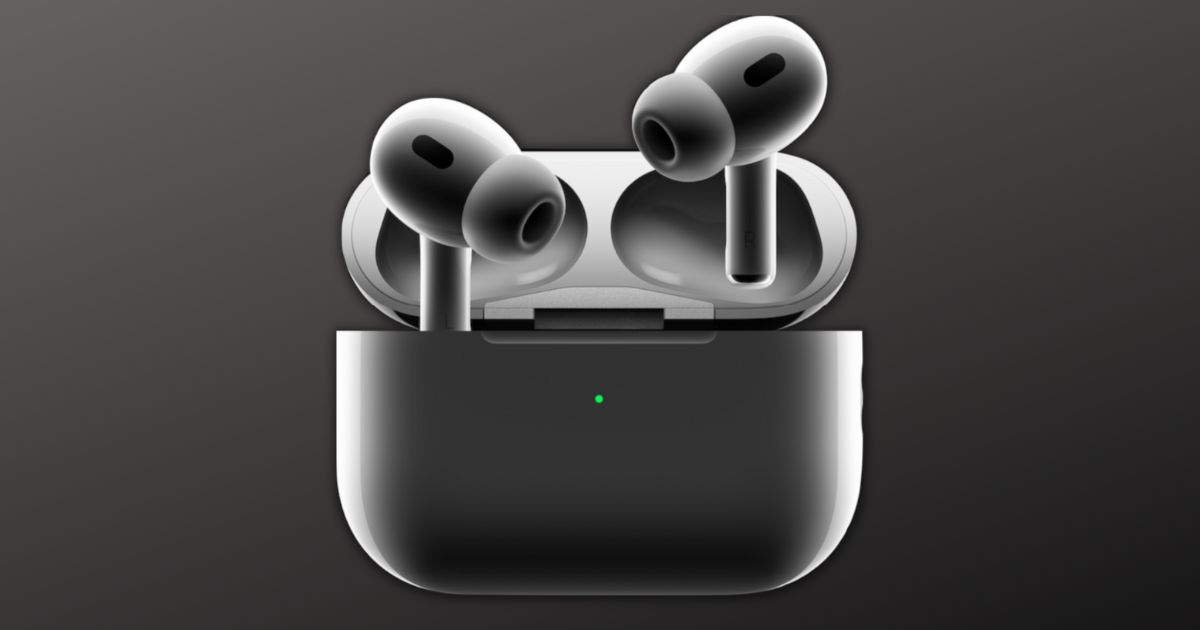
    On Wednesday, repair website iFixit posted a teardown video of Apple’s second-generation AirPods Pro, providing a closer look at the internals of the new earbuds and charging case. The teardown confirms that AirPods Pro remain largely unrepairable.

    Opening up the AirPods Pro and the charging case continues to result in unfixable damage, preventing battery replacements and other repairs.

    As noted before, the video shows the metal insert on the charging case for attaching a lanyard is welded to the Lightning connector inside the case. iFixit doesn’t offer an explanation as to its function, even though CT scanning company Lumafield has speculated that the new lanyard insert could double as an antenna for the U1 chip, which boosts the Find My feature.

    There aren’t too many new suprises to be found with the internals of the new AirPods Pro 2 and charging case, which remain environmentally unfriendly.

    The new AirPods Pro launched last Friday and retail for $249 in the United States.

    Via MacRumors and iFixit

  • Lumafield posts CT scans of AirPods Pro 2 charging case, lanyard loop could serve as possible antenna

    Lumafield posts CT scans of AirPods Pro 2 charging case, lanyard loop could serve as possible antenna

    This could be interesting.

    On Tuesday, Lumafield posted CT scan images of the Apple AirPods Pro 2 charging case, offering a look at changes that had been incorporated since the first version.

    While the basic layout of the case appears to be similar to the original, Lumafield discovered that the newly added “lanyard loop” is internally connected to the Lightning connector, which interfaces with the logic board, leading the company to speculate that the metal insert might double as an antenna for the U1 chip or serve some other additional purpose.

    There’s also a new metal eyelet on the side of the case. While Apple has stated that this is for a lanyard, it also seems to serve an additional purpose. The new metal eyelet is 4 mm deep and 18 mm long, with a hidden tail that’s connected to a metal pad around the Lightning port. It’s thought that this could serve as an antenna to support improved “Find My” tracking.

    The U1 chip enables Find My support, allowing users to track the location of the charging case in the Find My app on their iPhone or on iCloud.com. The case features a new built-in speaker that can emit a chime to help with finding it.

    Other changes to the charging case include improved water resistance, support for the Apple Watch’s magnetic charging puck, and longer battery life.

    The AirPods Pro 2 launched last Friday and retail for $249 in the United States.

    Stay tuned for additional details as they become available.

    Via MacRumors and Lumafield