Tag: end of life

  • Classic BlackBerry devices will lose access to crucial features on January 4th

    Classic BlackBerry devices will lose access to crucial features on January 4th

    It’s the end of an era.

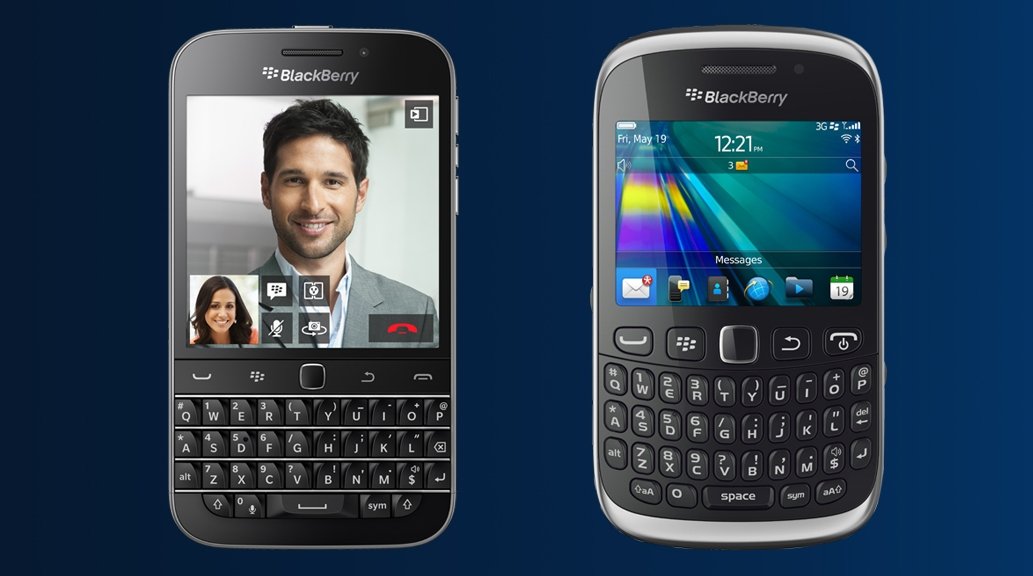
    BlackBerry has announced that a number of its classic devices running BlackBerry software will will access to crucial features tomorrow.

    The company announced the end of life of features like calling, texting, and data on classic BlackBerry devices — such as those running BlackBerry OS 7.1 or earlier, or OS 10 — will occur on Jan. 4, 2022. Without the ability to call or even text reliably, the devices are pretty much as good as dead.

    BlackBerry-branded devices that run on the Android operating system will continue to function normally, and the end of life will only apply to BlackBerry’s legacy hardware.

    Back in February 2020, the last major manufacturer of BlackBerry smartphones and tablets announced that it would stop producing the iconic brand. In 2019, BlackBerry shut down its App Store and messaging service.

    The BlackBerry brand has survived via third-party licensing, and back in 2020, a Texas company called OnwardMobility said it would release a new 5G Android smartphone with BlackBerry branding in 2021. As of Dec. 31, 2021, that device has yet to be released.

    BlackBerry’s parent company, BlackBerry Limited, has also moved on to other ventures. Currently, the company sells cybersecurity software and other solutions to enterprise and government customers.

    Stay tuned for additional details as they become available.

    Via AppleInsider and BlackBerry

  • Adobe officially discontinues Flash Player support across all platforms, recommends uninstalling the software immediately

    It’s time to uninstall Adobe Flash Player.

    Following Adobe’s 2017 announcement of its plans to end support of its Flash browser plug-in at the end of 2020, the time has now passed and support for the software has ended. From now on, Adobe will begin blocking content from running in Flash Player beginning on January 12.

    Flash’s elimination should heavily impact users given that most web browsers have moved away from the format. The change will also not affect iPhone and iPad users, as neither iOS or iPadOS supported Flash.

    As of 2010, Apple co-founder and former CEO Steve Jobs critiqued Flash in an open letter, citing its lack of reliability, incompatibility with mobile sites, and battery drain on mobile devices. Jobs also said that Adobe was “painfully slow to adopt enhancements to Apple’s platforms” and further innovation from Apple would not be hindered by a “cross platform development tool.”

    Though venerable, Flash Player continually suffered from vulnerabilities that exposed Mac and PC users to malware and other security risks that caused vendors like Microsoft and Apple to work tirelessly to keep up with security fixes.

    Given that Flash Player will no longer receive updates, Adobe has recommended that all users immediately remove the software “to help protect their systems.”

    Stay tuned for additional details as they become available.

    Via MacRumors and Adobe

  • Recent security updates make Macs more secure, unless you’re a Snow Leopard user

    snowleopardEverybody was concerned last week when it was announced that a nasty bug in OS X was leaving Macs vulnerable to attacks that could grab information traveling across shared networks. While it has been confirmed that the bug only affected Mavericks, Apple simultaneously posted security updates for Mountain Lion (10.8) and Lion (10.7), but there was no sign of any security love for Snow Leopard (10.6). This really shouldn’t be a surprise to most people since 10.6 was also skipped when a previous security update was released as well as an update to the Safari browser. The omission of 10.6 from the current update simply confirms that Snow Leopard is no longer on Apple’s radar.

    (more…)

  • Apple begins offering 13.3-inch MacBook Air notebook to education buyers for $999

    Apple’s tres-nifty white MacBook notebook may have officially gone the way of the dodo last week, but that doesn’t mean there isn’t a replacement in the works.

    Per AppleInsider, the company has begun selling a less powerful version of its 13.3-inch MacBook Air to educational institutions buying in bulk for US$999, filling the void left by the recently discontinued white MacBook.

    The new model, only available to education buyers ordering in bulk sizes of five or more, features the same internal components as the 11.6-inch MacBook Air available to general consumers for US$999. But the new, discounted hardware sports a larger 13.3-inch display. They are advertised to ship within three to five days.

    The 13.3-inch education model and the entry-level 11.6-inch MacBook Air both feature a 1.6GHz dual-core Core i5 Intel processor, along with two gigabytes of RAM and a 64-gigabyte solid-state drive. They are also powered by the Intel HD Graphics 3000 chipset included on the Core i5 CPU.

    The standard 13-inch consumer-level MacBook Air remains priced at US$1,299. The speedier machine has a 1.7GHz dual-core Core i5 Intel CPU, 4 gigabytes of RAM, and a 128-gigabyte solid-state drive.

    Last July, Apple discontinued its white MacBook, which previously served as the entry-level notebook in Apple’s lineup. Its price point was filled by the 11.6-inch MacBook Air, which carries the same US$999 cost.

    Apple continued offering the white MacBook to education buyers for months, but this week the company finally ceased sales of the legacy notebook. Resellers have since been notified that the white MacBook is now classified as “end of life.”

    Stay tuned for additional details as they become available.

  • Apple pulls plug on white MacBook notebook, product reaches “End of Life” status

    You had to like the white MacBook.

    If nothing else, it was plucky and it looked pretty good when you were working on one in a coffee shop.

    Unfortunately, Apple has reportedly notified resellers that the white polycarbonate MacBook is now officially classified as “End of Life” and has been discontinued.

    Per MacRumors, Apple has stopped selling the white notebook to even its educational markets and notified resellers that the MacBook is now classified as “End of Life.”

    The MacBook was Apple’s entry-level notebook for years, but it faced internal competition in 2010 with the release of the 11.6-inch MacBook Air, which also started at US$999 and was an instant hit.

    Apple introduced the MacBook in May 2006 during the transition from PowerPC to Intel processors. In 2008, it temporarily received an aluminum makeover, but that machine was later rebranded as the 13-inch MacBook Pro. Apple released a unibody polycarbonate design in 2009 that remained until the product was discontinued last year.