Tag: M2

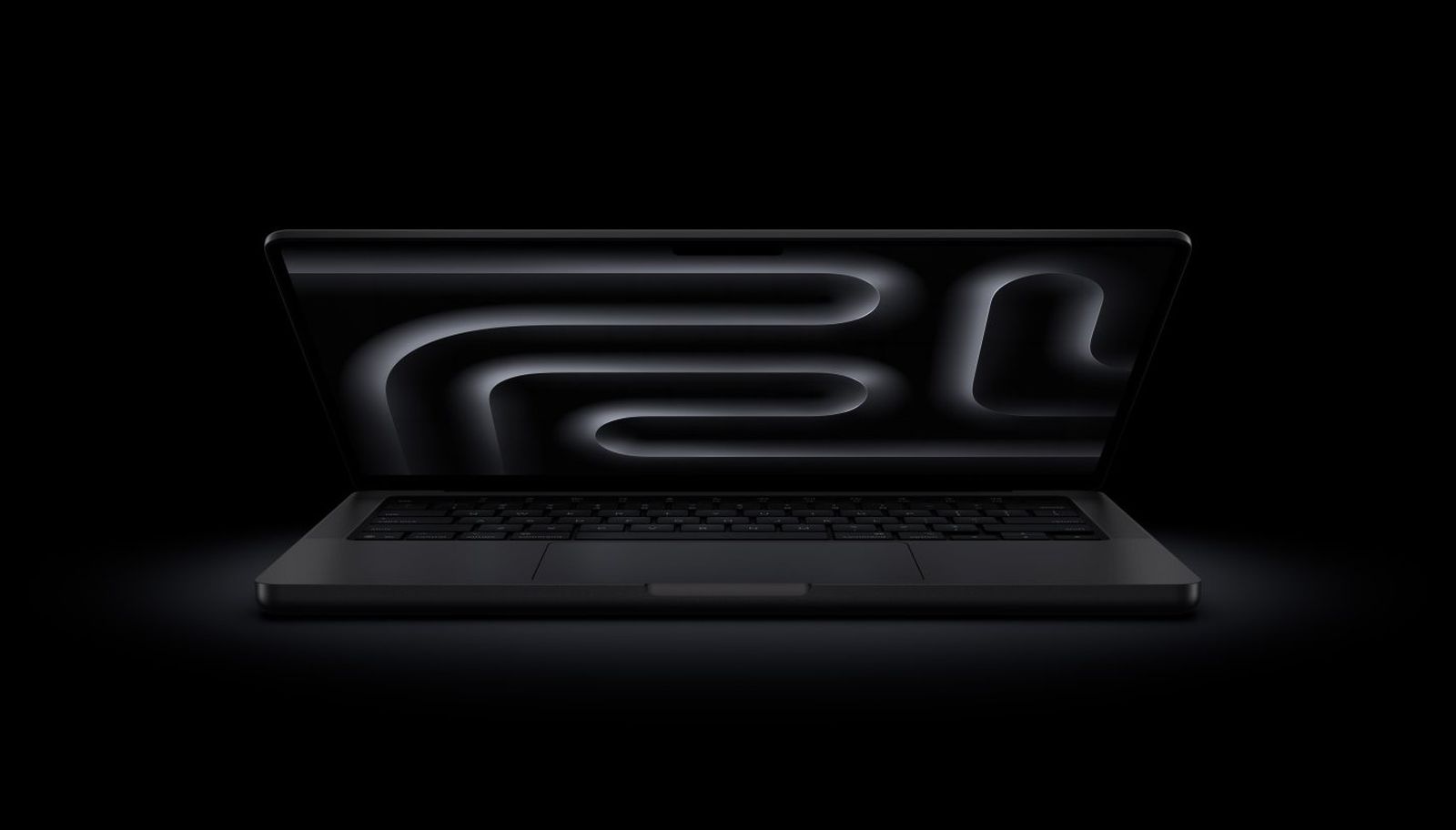
  • Some MacBook Pro configurations see up to a two-month delay ahead of possible next-gen M5 MacBook Pro release

    Some MacBook Pro configurations see up to a two-month delay ahead of possible next-gen M5 MacBook Pro release

    If there’s one telltale sign of a forthcoming next generation of hardware, it’s usually supply constraints and how this affects shipping.

    Per MacRumors, the availability has recently tightened for the MacBook Pro on Apple’s online storefront, with select configurations facing up to a two-month delivery timeframe in the United States.

    A few 14-inch and 16-inch M4 Pro MacBook Pro notebooks are still available without any shipping delay. Still, the estimated delivery dates for many configurations with the M4 Max chip now extend from February 6 to February 24 or even later. At the most extreme end, all built-to-order 14-inch MacBook Pro configurations with a 16-core M4 Max chip and 128GB of RAM are estimated to be delivered as late as March 17 on Apple’s online store.

    In the case of the entry-level 14-inch MacBook Pro, which was updated to an M5 chip in October, the wait continues for configurations with the M5 Pro and M5 Max chips. These delays have historically indicated that a forthcoming generation is on the horizon, although ongoing RAM supply constraints could also be contributing to the shipping delays.

    Apple unveiled MacBook Pro models with M2 Pro and M2 Max chips in January 2023, so there is precedent for a MacBook Pro refresh in January. Apple’s Creator Studio bundle of creative apps launches on Wednesday, January 28, and the company will be holding its next quarterly earnings call on Thursday, January 29.

    Stay tuned for additional details as they become available.

    Via MacRumors and Apple
  • Apple doubles 5GHz Wi-Fi 6E bandwidth for some devices via iPadOS 26.2, macOS Tahoe 26.2 updates

    Apple doubles 5GHz Wi-Fi 6E bandwidth for some devices via iPadOS 26.2, macOS Tahoe 26.2 updates

    This is pretty nifty.

    Apple apparently snuck a useful upgrade through with its iPadOS 26.2 and macOS Tahoe 26.2 updates, the new operating systems offering improved Wi-Fi speeds for select Macs and iPads that support Wi-Fi 6E.

    The M4 iPad Pro models, M3 iPad Air models, A17 Pro iPad mini, M2 to M5 MacBook Pro models, ‌M2‌, M3, and M4 MacBook Air models, and other Wi-Fi 6E Macs and iPads now support 160MHz maximum channel bandwidth when connected to 5GHz Wi-Fi networks, the same theoretical maximum throughput supported by 6GHz networks. Previously, these devices were limited to 80MHz.

    Under ideal conditions, the devices should see faster file transfers, quicker uploads, and smoother streaming. Wi-Fi 6E devices can take advantage of 6GHz networks, although 5GHz networks remain far more common. 6GHz networks require new router hardware, along with a machine that can take advantage of a 6GHz network.

    Through the upgrade, the devices can connect to 5GHz networks with a throughput approaching peak 6GHz speeds without having to connect to a 6GHz network. Users with a Wi-Fi 6 or Wi-Fi 6E network that supports 160MHz on 5GHz networks will be able to take advantage of the bandwidth improvement. Devices that have the updated 160MHz bandwidth limit will not see improvements when connected to 5GHz routers limited to 80MHz.

    While 5GHz bandwidth has improved on select Macs and iPads, 6GHz networks still offer less congestion and more spectrum to work with.

    Stay tuned for additional details as they become available.

    Via MacRumors and support.apple.com

  • Rumor: Apple presently has no plans to release an updated Mac Pro in the near future

    Rumor: Apple presently has no plans to release an updated Mac Pro in the near future

    If you’re expecting a spiffy new Mac Pro tower, you might have to wait a while.

    Per Bloomberg’s Mark Gurman, Apple has “largely written off the Mac Pro.”

    The desktop, which was last updated in 2023 with the M2 Ultra chip, appears to be off the list for updates anytime soon.

    Gurman outlines that Apple’s Mac Pro strategy “doesn’t look set to change anytime soon.” Apple is no longer working on an M4 Ultra chip, and stated that the Mac Pro that was slated to include that chip “was also nixed.”

    This means that Apple’s next high-end chip will be the M5 Ultra, which is currently only destined for the Mac Studio desktop. This indicates that “the Mac Pro won’t be updated in 2026 in a significant way.”

    Granted, this doesn’t explicitly indicate that Apple will never release an updated Mac Pro desktop. As things stand right now, it appears that the Mac Studio will be Apple’s most powerful desktop going forward in the near term.

    Stay tuned for additional details as they become available.

    Via 9to5Mac and Bloomberg

  • M5-based MacBook Pro, iPad Pro, and Vision Pro become available in retail locations

    M5-based MacBook Pro, iPad Pro, and Vision Pro become available in retail locations

    Apple on Wednesday released its trio of new M5-equipped products in the fom of the MacBook Pro, the iPad Pro, and the Vision Pro.

    Following pre-orders last week, Apple’s new M5 products are shipping to customers today and are available in Apple Stores worldwide.

    These latest Apple products include:

    • M5 MacBook Pro
    • M5 iPad Pro
    • M5 Vision Pro

    The M5 chip represents a significant highlight for each product, but the iPad Pro and Vision Pro each offer several additional benefits. Where the new iPad Pro is concerned, the N1 and C1X chips, as well as RAM upgrades, offer improvements over the 2024 M4 iPad Pro model.

    Where the updated Vision Pro is concerned, the M5 chip offers a significant improvement over the M2 chip the Vision Pro originally shipped with. The device also features a more comfortable Dual Knit Band, better battery life, and other small improvements.

    The M5-based MacBook Pro has been noted as seeing some benchmark performance boosts over last year’s M4 model, with improvements being seen more on the GPU side of the unit’s functionality.

    The units are available for online order and walk-in retail purchase.

    Stay tuned for additional details as they become available.

    Via 9to5Mac and @tim_cook

  • Apple announces M5-based Vision Pro, includes Dual Knit Band, faster charging, and other features

    Apple announces M5-based Vision Pro, includes Dual Knit Band, faster charging, and other features

    Amidst Apple’s bevy of new product announcements on Wednesday, the company also unveiled an updated Vision Pro headset, complete with an M5 chip and a more comfortable Dual Knit Band.

    The M5 chip has a 10-core CPU, a 10-core GPU with Neural Accelerators, and a 16-core Neural Engine, and while the updated Vision Pro continues to offer 16GB of RAM, the M5 chip allows for faster performance and longer battery life compared to the previous model with the M2 chip.

    While Apple has not provided any overall performance figures, the company’s website says the Vision Pro now offers up to three hours of video playback per charge, compared to up to 2.5 hours for the previous model. In addition to improved battery life, Apple has stated that the M5 chip enables the rendering of 10 percent more pixels on the displays compared to the previous model, resulting in sharper images and crisper text. The updated Vision Pro also offers up to a 120Hz refresh rate, up from the previous version’s limit of 100Hz, which Apple says reduces motion blur and provides a smoother experience when using Mac Virtual Display.

    With the M5 chip, the Vision Pro gains hardware-accelerated ray tracing and mesh shading for improved graphics rendering. These capabilities were first introduced with the M3 chip, but the previous Vision Pro only had an M2 chip.

    Other new features include the M5’s faster 16-core Neural Engine and a Neural Accelerator in each GPU core, allowing for AI features to run up to 50 percent faster than the previous Vision Pro model.

    The updated Vision Pro still has an R1 chip for input processing. The headset continues to support Wi-Fi 6, rather than Wi-Fi 6E or Wi-Fi 7, and Bluetooth 5.3.

    Some things remain the same, with the new Vision Pro offering new design changes or color options. The unit still uses a tethered battery pack as opposed to a built-in battery.

    Some improvements has been paid to the comfort elements, and the updated Vision Pro arrives with the Dual Knit Band, a Light Seal, two Light Seal Cushions, a cover for the front of the device, and a polishing cloth. The unit still includes a battery, and a USB-C charging cable, but now offers Apple’s new 40W Dynamic Power Adapter with 60W Max, whereas the previous Vision Pro came with Apple’s discontinued 30W USB-C Power Adapter.

    The new Dual Knit Band comes in small, medium, and large sizes. It is available to purchase separately for $99, and it is compatible with the previous-generation Vision Pro. Users can find your preferred size by using the Apple Store app on the iPhone.

    Apple has stated that the new Dual Knit Band offers two straps knitted into a single piece. The upper strap goes across the top of the head, and the lower strap goes across the back of the head. The lower strap has tungsten inserts that provide a counterweight for additional comfort, balance, and stability. Users can adjust the fit of both of the straps with the Fit Dial.

    Other new changes include the availability of the Logitech Muse spatial stylus, as well as the PlayStation VR2 Sense controller, which Apple will begin selling on Tuesday, November 11.

    The updated Vision Pro became available for pre-order on Wednesday, and it will begin arriving to customers and launch in stores on Wednesday, October 22.

    In the U.S., the Vision Pro continues to start at $3,499, and it can be configured with 256GB, 512GB, or 1TB of storage. The new model is also available in Australia, Canada, China, France, Germany, Hong Kong, Japan, the U.K., and the United Arab Emirates. Availability in South Korea and Taiwan will begin at a later date, according to Apple.

    Users can demo the new Vision Pro at an Apple Store starting October 22.

    Stay tuned for additional details as they become available.

    Via MacRumors and Apple