
Tag: United States

  • macOS Tahoe 26.3 source code hints at three possible new Apple projects, new products

    macOS Tahoe 26.3 source code hints at three possible new Apple projects, new products

    Apple may have hinted at more than it meant to with an analysis of the macOS Tahoe 26.3 source code.

    Per Macworld’s Filipe Espósito, the code hints at the following forthcoming products and their codenames:

    The codenames:

    J700: Lower-cost MacBook
    J427: A new Studio Display
    J527: A new, higher-end Studio Display

    This marks the first time that these codenames have been spotted in Apple’s software updates and per MacRumors, the codenames were also present in updates such as macOS 26.2 and iOS 18.5 last year.

    The current assumption is that Apple will announce its lower-cost MacBook notebook as part of three days of new product announcements in the first week of March. The media would then receive hands-on time with the laptop during the “Apple Experience” in New York, London, and Shanghai on Wednesday, March 4 at 9 a.m. Eastern Time.

    The MacBook is expected to be powered by a version of the iPhone 16 Pro’s A18 Pro chip, rather than an M-series chip. It’s also thought that the unit will be available in a variety of bright colors, such as yellow, green, blue, and/or pink. Other rumored specs include a 12.9-inch display and 8GB of RAM. The starting price remains to be seen, with estimates ranging from $599 to $799 in the United States.

    Where the updated Studio Display is concerned, the unit is rumored to feature a 27-inch screen with mini-LED backlighting, up to a 90Hz or 120Hz refresh rate, HDR support, and an A19 chip or A19 Pro chip. No major design changes are expected.

    The current Studio Display launched in March 2022, alongside the first Mac Studio. It has a 27-inch screen without mini-LED backlighting, a 5K resolution, a 60Hz refresh rate, up to 600 nits brightness, a built-in camera and speakers, one Thunderbolt 3 port, and three USB-C ports. In the U.S., pricing starts at $1,599.

    It’s unknown exactly what a higher-end Studio Display will bring to the table.

    As always, stay tuned for additional details as they become available.
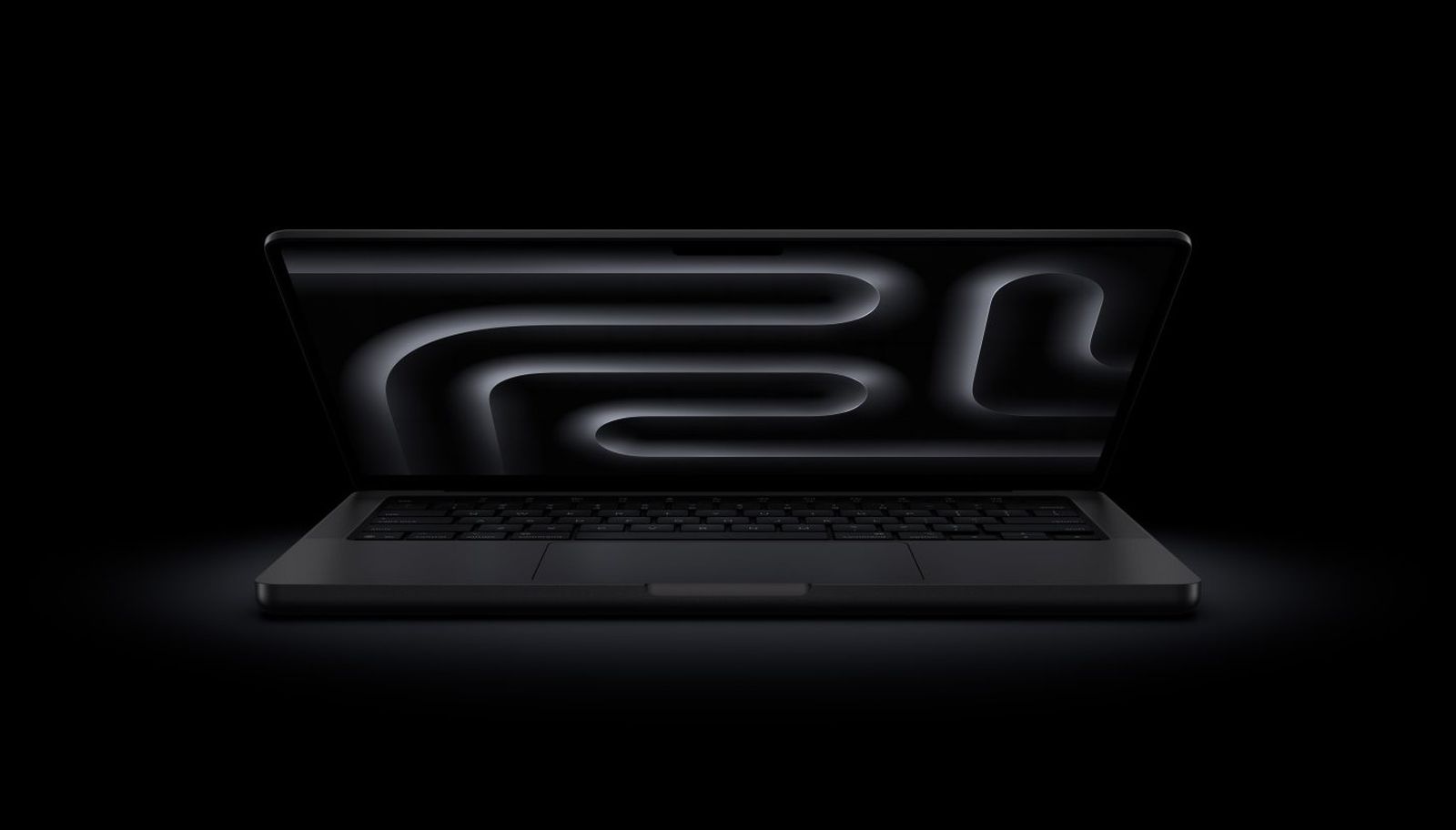
    Via MacRumors and Macworld

  • Some MacBook Pro configurations see up to a two-month delay ahead of possible next-gen M5 MacBook Pro release

    Some MacBook Pro configurations see up to a two-month delay ahead of possible next-gen M5 MacBook Pro release

    If there’s one telltale sign of a forthcoming next generation of hardware, it’s usually supply constraints and how this affects shipping.

    Per MacRumors, the availability has recently tightened for the MacBook Pro on Apple’s online storefront, with select configurations facing up to a two-month delivery timeframe in the United States.

    A few 14-inch and 16-inch M4 Pro MacBook Pro notebooks are still available without any shipping delay. Still, the estimated delivery dates for many configurations with the M4 Max chip now extend from February 6 to February 24 or even later. At the most extreme end, all built-to-order 14-inch MacBook Pro configurations with a 16-core M4 Max chip and 128GB of RAM are estimated to be delivered as late as March 17 on Apple’s online store.

    In the case of the entry-level 14-inch MacBook Pro, which was updated to an M5 chip in October, the wait continues for configurations with the M5 Pro and M5 Max chips. These delays have historically indicated that a forthcoming generation is on the horizon, although ongoing RAM supply constraints could also be contributing to the shipping delays.

    Apple unveiled MacBook Pro models with M2 Pro and M2 Max chips in January 2023, so there is precedent for a MacBook Pro refresh in January. Apple’s Creator Studio bundle of creative apps launches on Wednesday, January 28, and the company will be holding its next quarterly earnings call on Thursday, January 29.

    Stay tuned for additional details as they become available.

    Via MacRumors and Apple

  • Apple is now offering two-hour free delivery for some items through December 24 throughout the United States and Canada

    Apple is now offering two-hour free delivery for some items through December 24 throughout the United States and Canada

    If you’re looking to get an Apple present to your house in a hurry, you’re in luck.

    Apple has begun offering free two-hour delivery on eligible, in-stock products for those who still need to do some last-minute gift shopping. The delivery update is available through December 24 in most metro areas of the U.S. and Canada, while three-hour delivery is available as an option throughout Australia.

    The two-hour delivery option is provided through courier companies that Apple has partnered with, such as Uber Eats and Postmates, and typically retails for $9. The items are available through local Apple Store retail locations, so the items will need to be in stock before the order is placed.

    The offer is available for purchases of iPhone, iPad, Mac, Apple Watch, AirPods, Apple TV, and Beats headphones. It is not available for custom Macs or engraved orders, nor is it applicable to accessories. Some accessories and products are also still available for December 24th delivery with express shipping.

    Apple is still providing an extended return policy, so items purchased now can be returned through January 6, 2026.

    Stay tuned for additional details as they become available.

    Via MacRumors and Apple

  • Rumor: Apple may use Intel to help produce lower-end M7 chips in the United States beginning in 2027

    Rumor: Apple may use Intel to help produce lower-end M7 chips in the United States beginning in 2027

    After years of strife, Intel could see its chip foundries once again making Apple chips as soon as 2027.

    Per AppleInsider and industry analyst Ming-Chi Kuo, the lower-end M7 Apple Silicon chip could be produced in the United States come 2027.

    Until now, all M-series chips used in Macs and iPads have been built by TSMC at its factories in China and elsewhere. Kuo’s post suggests that Apple will have TSMC build its entry-level M-series chips at its U.S.-based factories from 2027. The rest of Apple’s chips will continue to be provided by TSMC. The post also noted that Apple has already been discussing its manufacturing technologies and their suitability for M-series production.

    The report goes on to say that simulation and research projects have so far proven successful. Apple is now reportedly waiting for Intel to get its technological ducks in a row to use its 18AP node around the middle of 2027.

    It’s thought that Intel-built M7 chips could likely be used in iPads and MacBooks in roughly two years. Kuo’s report also notes that the upper end of the line, such as the Pro and Max chips, will stay with TSMC.

    The M7 chips are thought to remain based on the ARM architecture, as all M-series chips have been since their introduction. Intel, in turn, while producing them, will not use its x86 hardware that Apple famously transitioned away from in 2020.

    As for why Apple would want to have Intel manufacture its chips again, Kuo has posited two key reasons:

    The first is a continued effort by Apple to diversify its supply chain. Apple has sought to avoid a heavy reliance on single companies and Chinese factories in particular since the COVID-19 pandemic caused mayhem in its supply chain. By adding Intel as a source of Mac and iPad chips, the company diversifies its production.

    The second reason is political, wherein Apple sees using Intel’s U.S.-based factories as a way to appease United States President Donald Trump. Trump has long sought to push companies to bring manufacturing back to the States, something Apple has struggled to do.

    Appeasing the Trump administration could be seen as a way to earn preferential treatment, especially in the wake of tariffs, which have caused economic uncertainty around global manufacturing.

    Stay tuned for additional details as they become available.

    Via AppleInsider and @mingchikuo

  • Apple announces U.S. passport feature for Wallet app

    Apple announces U.S. passport feature for Wallet app

    Apple on Wednesday announced that iPhone users can now create a Digital ID in the Apple Wallet app featuring the information from their U.S. passport.

    To create and present a Digital ID based on a U.S. passport, you’ll need following:

    • An iPhone 11 or later running iOS 26.1 or later, or an Apple Watch Series 6 or later running watchOS 26.1 or later
    • Face ID or Touch ID and Bluetooth turned on
    • An Apple Account with two-factor authentication turned on
    • A valid U.S. passport that is not expired
    • Your device region set to United States

    The digital ID can be created by opening the Wallet app on the iPhone, tapping on the plus sign in the top-right corner of the screen, and then select Driver’s License or ID Cards. Next, select Digital ID and follow the on-screen instructions to start the setup and verification process.

    During the setup process, you’ll have to use your iPhone to scan the photo page of the physical passport. You’ll also be asked to use the iPhone to read the chip embedded on the back of their passport, to ensure the data’s authenticity. From there, you’ll be asked to take a selfie for verification, and as another security step, you will also be prompted to complete a series of facial and head movements during the setup process.

    The Digital ID can be presented in person at TSA checkpoints in select U.S. airports for age and identity verification purposes during domestic travel. However, Apple said it is not a replacement for a physical passport, and it cannot be used for international travel and border crossing purposes.

    Apple has stated that Digital IDs are accepted at TSA checkpoints at more than 250 airports across the U.S., but that the feature itself is still in public beta.

    To present a Digital ID in person, double-click the iPhone’s side button and select Digital ID. Then, hold the iPhone near a scanner, review the information being requested, and authenticate with Face ID or Touch ID. The feature is also available on the Apple Watch.

    Apple has also stated that in the future, users will be able to present their Digital ID at select stores for identity and age verification in person, as well as in supported apps and online on supported websites. The company didn’t offer a specific timeframe as to when this could be expected.

    Finally, Apple stated that the Digital ID data is encrypted, and that users will not need to unlock, show, or hand over their device to present their Digital ID.

    Stay tuned for additional details as they become available.

    Via MacRumors and support.apple.com